In the burgeoning landscape of the Internet of Things (IoT), reliable, long-range, and low-power communication is paramount. This is where LoRa (Long Range) technology, and specifically, expertly engineered LoRa antennas, play a transformative role. At VLG Wireless Technology Shenzhen China, a leading antenna manufacturer with over 15 years of innovation, we understand the critical nexus between antenna performance and the success of your IoT deployments. We are dedicated to providing cutting-edge LoRa antenna solutions that empower your devices to connect further, consume less power, and deliver data with unparalleled efficiency.
Decoding LoRa: The Foundation of Long-Range, Low-Power IoT
LoRa is a proprietary spread spectrum modulation technique that enables ultra-long-range communication with minimal power consumption. Operating primarily in the unlicensed Industrial, Scientific, and Medical (ISM) bands (e.g., 433 MHz, 868 MHz, 915 MHz), LoRa defies conventional wireless limitations, extending connectivity across kilometers, even in challenging environments.
The inherent advantages of LoRa make it the ideal choice for a myriad of IoT applications, including:
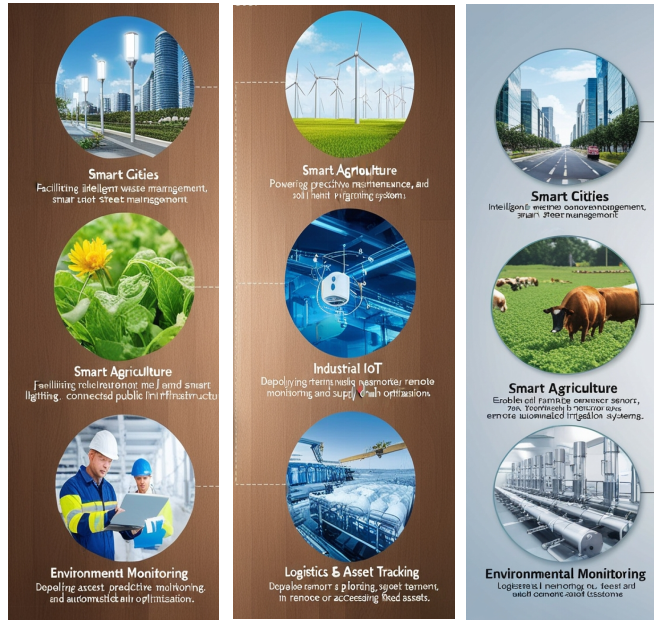
· Smart Cities: Facilitating intelligent waste management, smart street lighting, environmental monitoring, and connected public infrastructure.
· Smart Agriculture: Enabling precision farming with soil moisture sensors, livestock tracking, and automated irrigation systems.
· Industrial IoT (IIoT): Powering asset tracking, predictive maintenance, remote monitoring of machinery, and supply chain optimization.
· Environmental Monitoring: Deploying sensors for air quality, water levels, and weather patterns in remote or inaccessible locations.
· Logistics & Asset Tracking: Providing real-time visibility for goods in transit and fixed assets.
The Critical Role of the LoRa Antenna: More Than Just a Component
While LoRa technology itself is a marvel of radio frequency (RF) engineering, its true potential is unlocked by the antenna. The antenna is the transducer that converts electrical signals from your LoRa module into electromagnetic waves for transmission, and vice versa for reception. Its design, performance, and strategic deployment directly dictate the achievable communication range, link stability, and overall energy efficiency of your IoT network.
Technical Deep Dive: Key Parameters of a High-Performance LoRa Antenna
At VLG Wireless Technology, our expertise in antenna manufacturing ensures every LoRa antenna we produce meets rigorous technical specifications designed for optimal performance:
1. Operating Frequency Band: LoRa operates across different regional ISM bands. Our antennas are precisely tuned for these specific frequencies (e.g., 433MHz, 868MHz, 915MHz) to ensure maximum signal fidelity and regulatory compliance.
2. Antenna Gain (dBi): This metric quantifies an antenna’s ability to focus RF energy in a particular direction. Higher gain antennas extend range but narrow the beamwidth. We offer a range of gain options (e.g., 3dBi, 5dBi, 8dBi, up to 12dBi for directional applications) to suit diverse deployment scenarios, from omnidirectional urban coverage to long-distance point-to-point links.
3. Voltage Standing Wave Ratio (VSWR): A critical parameter indicating how well the antenna is matched to the transmission line impedance (typically 50 Ohms). A low VSWR (e.g., ≤1.5) ensures minimal power reflection, maximizing radiated power and optimizing link budget. Our manufacturing processes, including precise impedance matching networks, ensure excellent VSWR performance.
4. Radiation Pattern & Beamwidth:
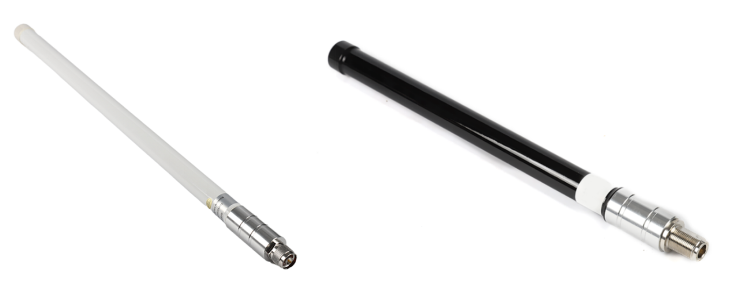
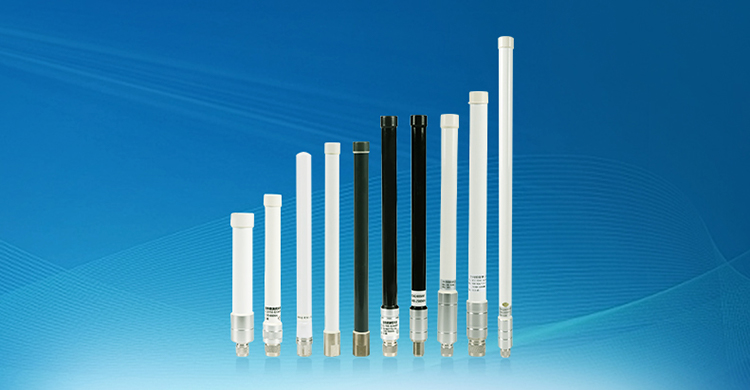
o Omnidirectional Antennas: Ideal for gateways and end-devices requiring 360-degree coverage, such as fiberglass omni antennas often seen on rooftops. These excel in urban environments with dispersed nodes.
o Directional Antennas: Such as Yagi or Panel antennas, concentrate RF energy into a focused beam, significantly extending range in a specific direction. Perfect for connecting remote devices or bridging long distances. Our advanced antenna design methodologies, coupled with state-of-the-art anechoic chamber testing, allow us to precisely control and optimize radiation patterns to meet specific application requirements.
5. Polarization: LoRa signals typically use linear polarization (vertical). Ensuring proper antenna orientation and polarization match between transmitting and receiving antennas is vital for maximizing signal strength and minimizing fade.
6. Efficiency: Represents how effectively the input power is converted into radiated power. Our designs minimize resistive losses from materials and matching circuits, maximizing overall antenna efficiency.
7. Durability & Environmental Robustness: For outdoor deployments, our LoRa antennas are engineered with robust materials like fiberglass, offering superior ingress protection (IP ratings) against harsh environmental conditions, including temperature extremes, UV radiation, and moisture.
VLG Wireless Technology: Your Strategic Partner in LoRa Antenna Solutions
As a specialized antenna manufacturing company based in Shenzhen, China, VLG Wireless Technology offers a comprehensive portfolio of LoRa antennas, meticulously designed and rigorously tested to deliver superior performance. Our commitment to quality, innovation, and customer satisfaction sets us apart:
· 19+ Years of Expertise: We bring deep industry knowledge and extensive experience in RF and antenna engineering to every product.
· Advanced R&D Capabilities: Our four R&D centers and 18 microwave anechoic chambers ensure cutting-edge design, precise characterization, and rapid prototyping.
· Diverse Product Range: From compact PCB antennas for embedded solutions to high-gain outdoor fiberglass omni and directional antennas, we cater to every LoRa application.
· OEM/ODM Support: We collaborate closely with clients to develop custom antenna solutions tailored to unique specifications and integration challenges.
· Proven Track Record: Our antennas power critical IoT infrastructure for leading global companies, a testament to our reliability and performance.
Whether you are designing a new LoRa WAN gateway, developing an innovative IoT end-device, or expanding your existing network, the antenna is a non-negotiable element for success. Partner with VLG Wireless Technology to leverage our expertise and secure LoRa antenna solutions that drive unparalleled connectivity and unlock the full potential of your IoT vision.
 Contact us today to discuss your LoRa antenna requirements and discover how VLG Wireless Technology can elevate your wireless performance.









 Home >
  +86 186 8871 1070


