



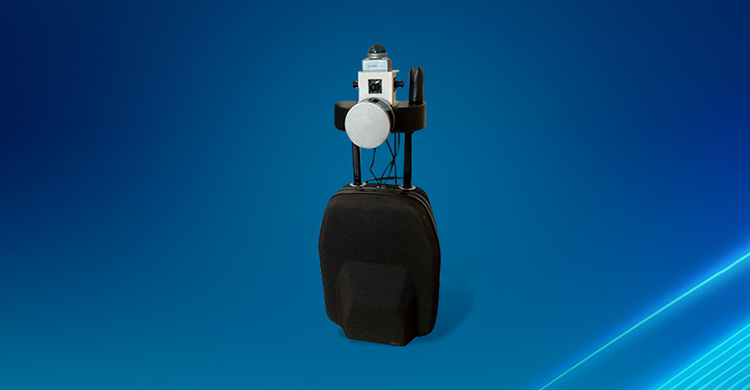



A smart meter antenna should be selected for the cellular module, operator bands and the installed meter enclosure. Choosing NB-IoT or LTE Cat 1 does not remove these checks. A suitable antenna in an open laboratory can behave differently inside a cabinet, behind a meter cover or near a battery.
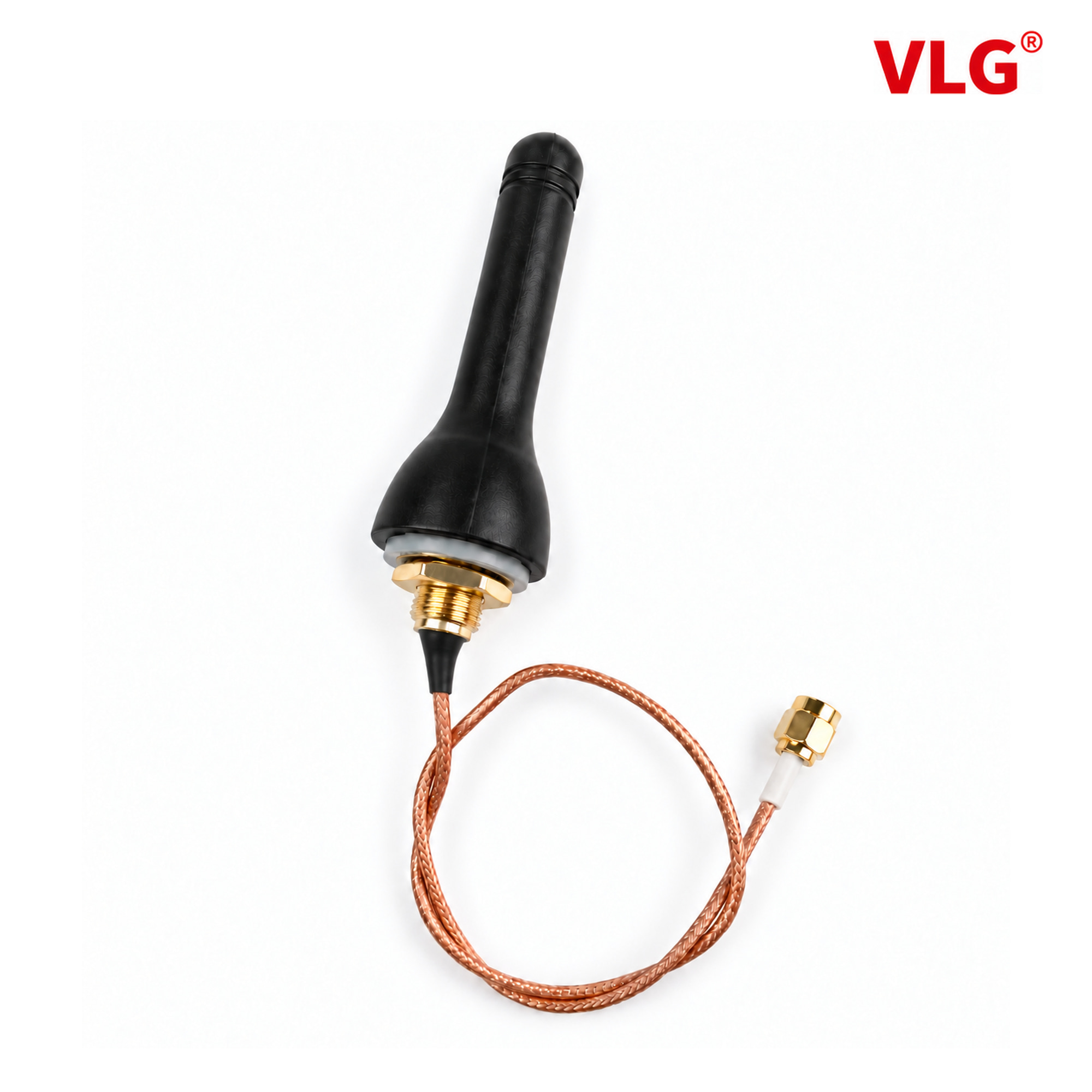
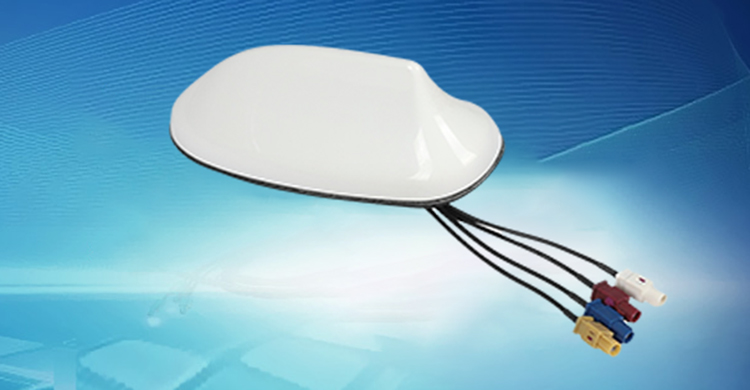
VLG V053-014-A-01 illustrates an external cabinet antenna construction. Suitability for a particular smart meter, NB-IoT band or LTE Cat 1 module requires model-specific frequency and installation checks.
Start with the network and module requirements
NB-IoT and LTE Cat 1 are cellular communication technologies, not antenna frequency specifications. Start with the exact module variant and the bands required by the operator in the destination market. Ask for antenna data covering those bands.
The communication technology should also fit the reporting interval, payload, firmware-update needs and power budget. A low-data-rate metering application may have different requirements from a gateway transferring larger amounts of data. Confirm the available network service before making the antenna choice.
Check the module hardware guide for the number and function of antenna ports. Do not assume that all Cat 1 and Cat 1 bis modules have identical antenna arrangements.
Internal antenna or external cabinet antenna?
An internal antenna can suit a meter with suitable non-metallic space and a controlled layout. Its placement must be reviewed alongside the circuit board, display, battery, shielding and wiring. Follow the selected design's ground and clearance requirements.
When a conductive cabinet obstructs the radio path, an external antenna may be worth evaluating. The complete assembly then includes the mounting interface, cable, connector and enclosure entry. Review sealing, cable strain relief and installation access as part of that design.
Neither approach guarantees coverage in a basement or underground chamber. Antenna placement and network conditions must be tested at representative installation sites.
Evaluate the complete cable and enclosure assembly
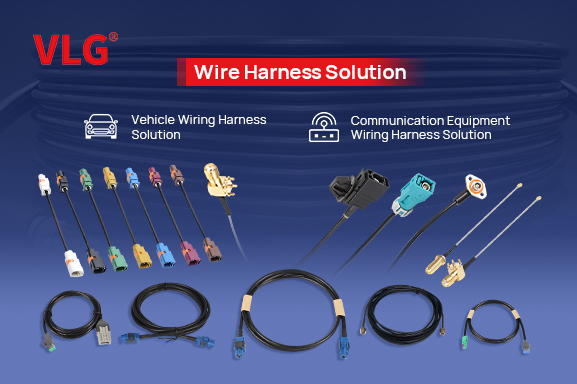
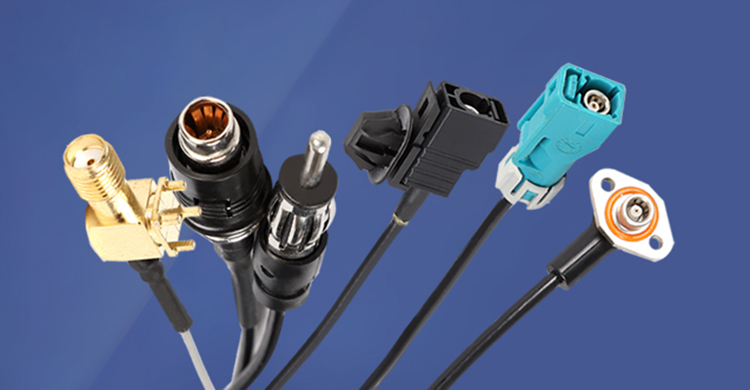
Specify cable type, length, routing and the exact mating connector. Additional cable length introduces loss, and a connector that looks similar may not match the module interface. Keep the production assembly consistent with the tested sample.
For an external antenna, check the required mounting surface and ground arrangement. For an embedded antenna, test with the final cover closed and nearby components installed. Quectel recommends optimizing an embedded antenna with the device because the enclosure and surrounding components influence RF performance.
Measure more than signal bars
Use a repeatable comparison: the same module, firmware, SIM, operating mode and location. Record the antenna revision and assembly configuration. Review impedance matching and radiation performance, then validate network operation in the finished meter.
- Record registration and connection behavior under representative coverage conditions.
- Check successful reading uploads and retries over the intended reporting cycle.
- Measure current consumption across sleep, connection and transmission states.
- Repeat relevant tests in the intended cabinet or chamber.
- Include likely installation differences in the sample plan.
Battery life belongs to the complete system power budget. It depends on the battery, reporting schedule, firmware, radio settings and network conditions as well as the antenna installation. An antenna alone cannot substantiate a multi-year battery-life promise.
Smart meter antenna FAQ
Can NB-IoT and LTE Cat 1 use the same antenna?
Possibly, if the antenna covers the required bands and meets each device's RF and mechanical requirements. The technology label alone is insufficient.
Will an external antenna solve every metal-enclosure problem?
No. It may improve the installation, but cable loss, mounting, interference and network availability still matter. Compare candidates in the actual equipment.
What should a meter manufacturer provide to VLG?
Send the module model, target country and operator, required bands, enclosure drawing, antenna location, connector and cable requirements. Include the reporting and power targets so the proposed validation matches the application.
See our embedded 4G LTE PCB antenna guide or contact VLG for antenna selection.
Further reading: Quectel LTE Cat 1 white paper and Quectel embedded antenna integration guidance.
 +86 186 8871 1070


