






Whether you need an 868 MHz or a 915 MHz LoRa antenna depends on where the device will operate, not on which frequency performs better. "868 MHz" refers to the EU band of 863–870 MHz. "915 MHz" refers to the US band of 902–928 MHz. The two frequencies are only about 5 % apart, so the antennas look alike, but a narrowband antenna tuned for one band can be poorly matched in the other. This guide explains the differences and ends with a checklist for choosing an antenna.
LoRa, LoRaWAN and regional band plans
LoRa is a chirp spread-spectrum modulation used in licence-exempt sub-GHz bands. LoRaWAN is a network protocol built on LoRa and maintained by the LoRa Alliance. Its Regional Parameters specification (RP002) defines a channel plan for each region. The plans that matter most for antenna choice are:
| LoRaWAN plan | Frequency range | Where it is used |
|---|---|---|
| EU868 | 863–870 MHz | European Union, and other countries that follow the European short-range-device rules |
| US915 | 902–928 MHz | United States and Canada |
| AU915 | 915–928 MHz | Australia and some other countries |
| AS923 | Sub-bands between about 915 and 928 MHz, depending on the country | Many Asia-Pacific countries |
| CN470 | 470–510 MHz | China |
Other national plans, for example in India and South Korea, use different frequencies again. Confirm the plan for each target country with the local regulator and the current RP002 document. "915 MHz" is not a worldwide frequency, and an EU868 product cannot simply be shipped to the US, or the reverse. The radio, the firmware's channel plan and the product's certification all follow the market, and the antenna has to cover the band that market uses.
Wavelength and antenna size
| 868 MHz (EU868) | 915 MHz (US915) | |
|---|---|---|
| Free-space wavelength | 345.4 mm | 327.6 mm |
| Half wave | 172.7 mm | 163.8 mm |
| Quarter wave | 86.3 mm | 81.9 mm |
| Band to cover | 863–870 MHz (7 MHz) | 902–928 MHz (26 MHz) |
| Bandwidth relative to centre frequency | about 0.8 % | about 2.8 % |
A 915 MHz element is about 5 % shorter than an 868 MHz one. The US band is also much wider, so a 915 MHz antenna needs more bandwidth. That is straightforward for a full-size whip and harder for a small embedded antenna, because the achievable bandwidth falls as an antenna gets smaller relative to the wavelength. For background, see why there are narrow-band and wide-band antennas.
Can an 868 MHz antenna be used at 915 MHz?
It depends on the antenna's bandwidth, and the datasheet answers the question better than the label does. Look at the VSWR or return-loss curve. An antenna can serve both markets if, as installed, it stays well matched (for example within a VSWR of 2:1) across both 863–870 MHz and 902–928 MHz and also keeps its efficiency and radiation pattern in both bands, because a good match alone does not prove good radiation. Broadband designs specified across a range such as 860–930 MHz are made for this purpose, and the radio's certification must allow the antenna in each market. A narrowband antenna tuned to 868 MHz is likely to be mismatched at 915 MHz, reflecting part of the transmit power and reducing receive performance. Small embedded antennas, and antennas whose resonance is shifted by the device housing, are the most sensitive, so measure them in the final enclosure.
The difference in propagation between the two frequencies is small. Free-space path loss is 20 log10(915/868) ≈ 0.5 dB higher at 915 MHz. That is minor next to antenna mismatch, cable loss, mounting height and the different power rules described below.
Power and duty-cycle rules differ by region
The regulatory differences between the bands affect real-world range more than the frequency difference does.
- EU, 863–870 MHz. Under the EU short-range-device rules and ETSI EN 300 220, the duty-cycle-limited sub-bands used by LoRaWAN typically allow 25 mW ERP (14 dBm ERP, about 16 dBm EIRP). Duty cycle depends on the sub-band, for example 1 % in 868.0–868.6 MHz (36 seconds of transmission per hour) and 0.1 % in 868.7–869.2 MHz, and it applies to all transmissions in the sub-band together, not to each channel separately. The 869.4–869.65 MHz sub-band allows up to 500 mW ERP at a 10 % duty cycle. Because these limits apply to radiated power, a higher-gain antenna means the transmitter must lower its output to stay within them.
- US, 902–928 MHz. Under FCC Part 15.247, frequency-hopping systems using at least 50 hopping channels, and digitally modulated systems with a measured 6 dB bandwidth of at least 500 kHz that meet the rule's power-density limit, may use up to 1 W (30 dBm) of conducted output power with antennas of up to 6 dBi gain. Above 6 dBi the conducted power must be reduced. For frequency-hopping systems whose measured 20 dB bandwidth is below 250 kHz, the rules also limit the total time on any one frequency to 0.4 seconds within a 20-second period. LoRaWAN US915 therefore limits each 125 kHz uplink to 400 ms of airtime, which excludes the slowest spreading factors (SF11 and SF12), and the device must still respect the cumulative occupancy limit. Which rule a particular LoRa device is certified under is part of its FCC authorization.
Other regions set their own limits. When an EU deployment and a US deployment show different ranges, the rules are often as much the reason as the antennas. Regulators also assess a radio product together with the antenna it is used with, so fitting a higher-gain antenna can take a certified product outside its limits. Check before swapping antennas on a deployed design.
How to choose a LoRa antenna
- Confirm the region and channel plan. Choose an antenna specified across the whole band of that plan, such as 863–870 MHz for EU868 or 902–928 MHz for US915, or across both if one product will serve several markets.
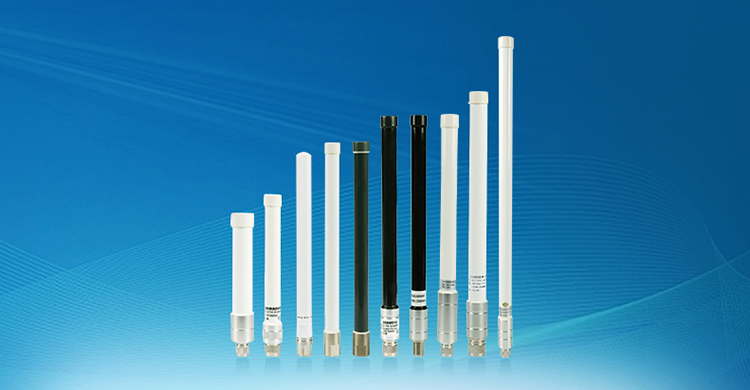
- Pick the form factor. End devices usually use an embedded PCB, FPC or spring antenna, or a short external whip. Gateways usually use an external omnidirectional antenna, often a fiberglass collinear for outdoor masts. Embedded antennas need the ground-plane size and clearance that their datasheet specifies.
- Match the gain to the coverage geometry. More gain on an omnidirectional antenna narrows its vertical beam toward the horizon. On a high mast covering a wide, flat area, a 6–8 dBi collinear can help. On a rooftop serving nearby buildings or sensors well below it, a lower-gain antenna with a wider vertical beam may cover them better. In the EU, the gain also counts toward the radiated-power limit.
- Check the match in the real installation. Measure VSWR or return loss across the band with the antenna in its housing or on its bracket. Keep polarization consistent between gateways and devices; most LoRa antennas are vertically polarized when mounted upright.
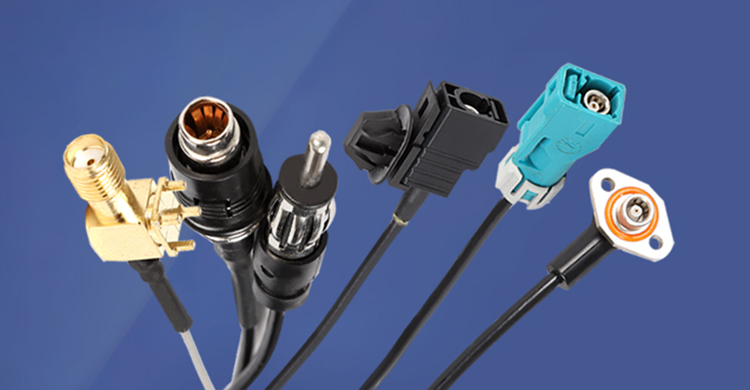
- Budget the cable. Use the shortest practical run and a cable with acceptable loss at 900 MHz, because a long run of thin coaxial cable can cancel the advantage of a higher-gain gateway antenna. Check the connector type (SMA, RP-SMA or N-type) at both ends.
- Plan for the environment. For outdoor antennas, check the stated ingress-protection rating, a UV-resistant radome and the mounting hardware, and ground the mast and cable entry for lightning protection.
What a better antenna can and cannot do
In free space, every 6 dB of extra link margin roughly doubles the range. Links near the ground rarely follow the free-space law, so treat any distance figure attached to an antenna gain as an estimate, not a promise. In a LoRaWAN network that uses adaptive data rate (ADR), a stronger link can let the network assign a faster data rate, which shortens the airtime of each message. Whether that extends battery life depends on the network settings and on how often the device transmits.
Related reading
- How ISM/LoRa antennas differ from Wi-Fi and cellular antennas
- LPWAN network adaptation of IoT antennas
- LoRa antennas for IoT connectivity
Choose a LoRa antenna with VLG
Working on an EU868 or US915 device or gateway? Contact VLG with your target markets, radio module and available space, and we can go through suitable antenna types with you.
 +86 186 8871 1070


