L Band Antenna for High-Precision RTK GNSS Survey Applications
2026-08-13
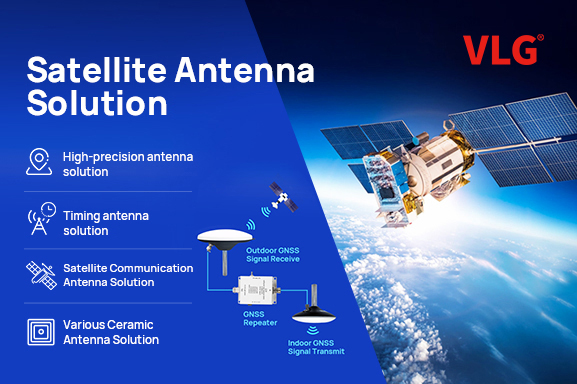
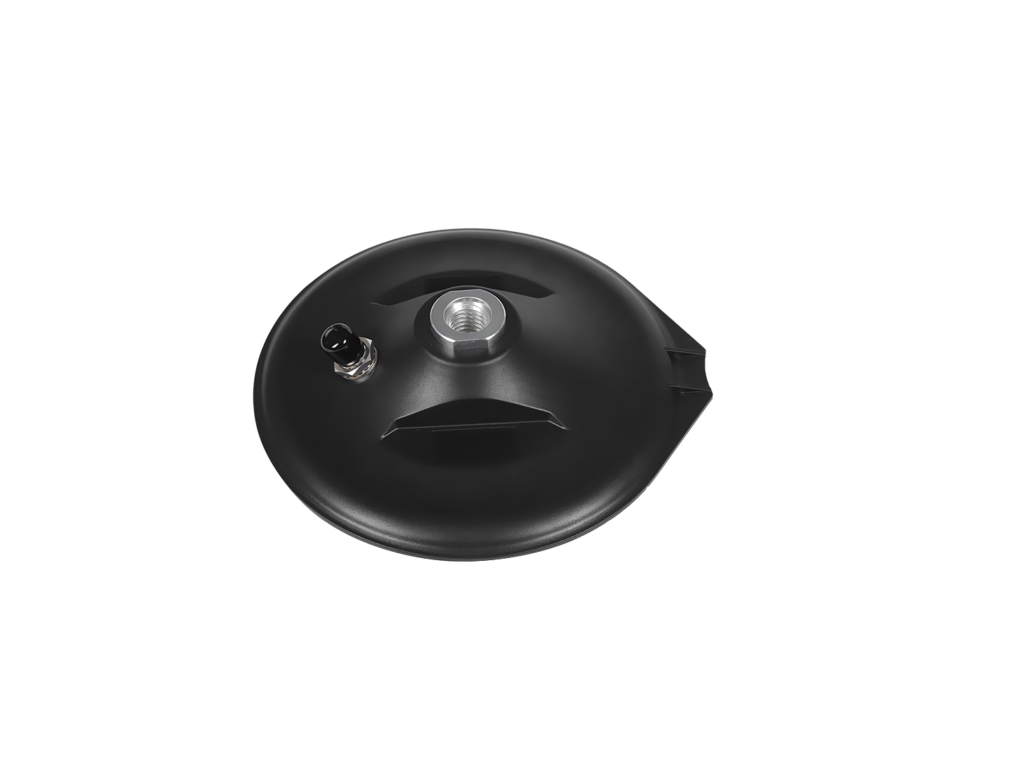
When positioning accuracy matters, standard antennas often cannot meet the requirements of professional surveying, mapping, and industrial control. A reliable l band antenna helps you achieve stable satellite signal reception across multiple navigation systems while reducing positioning errors in demanding environments. The V1194-132-A-01 from SHENZHEN VLG WIRELESS TECHNOLOGY is a high-precision RTK GNSS survey antenna designed for applications requiring GPS, BDS, GLONASS, Galileo, and L-band compatibility.
With a phase center error of only ±2mm, 40±2dB LNA gain, and IP66 protection, this antenna provides accurate and reliable positioning performance for surveying teams, engineering companies, and industrial users.
Why Choose VLG L Band Antenna for RTK GNSS Positioning?
Modern GNSS applications require antennas that can receive signals from multiple satellite systems while maintaining accuracy. The VLG V1194-132-A-01 integrates full-band reception technology to support advanced positioning requirements.
Compared with conventional GPS antennas, a professional multi-system GNSS survey antenna provides broader satellite coverage and better adaptability for high-accuracy positioning tasks.
Antenna Type
Application
Accuracy Requirement
Signal Support
Standard GPS Antenna
Consumer navigation
Meter-level
GPS only
Ceramic GPS Antenna
Compact devices
Medium accuracy
GPS/BDS
VLG RTK GNSS Antenna
Surveying & industrial control
Millimeter-level support
GPS/BDS/GLONASS/Galileo/L-band
Applications of High Precision GNSS Survey Antenna
The VLG l band antenna is suitable for industries where stable satellite communication and precise positioning are essential.
Typical applications include:
Geodetic mapping
Supports professional surveying equipment for land measurement and construction projects.
Marine survey
Provides stable positioning data for offshore and coastal measurement operations.
Geological deformation monitoring
Helps monitor micro displacement changes in infrastructure and natural environments.
Precision agriculture
Supports smart farming equipment requiring accurate positioning.
Construction machinery control
Enables accurate positioning for automated machinery and large engineering equipment.
Mobile mapping
Provides reliable GNSS signals for vehicle-based mapping systems.
How to Select the Right L Band Antenna for Your Project
Choosing the correct GNSS antenna requires evaluating your application environment and positioning requirements.
Follow these steps:
Identify satellite system requirements
Confirm whether your equipment needs GPS, BDS, GLONASS, Galileo, or L-band support.
Check positioning accuracy needs
RTK applications require antennas with low phase center error and stable signal performance.
Evaluate installation conditions
Outdoor projects should consider waterproof protection, temperature range, and mechanical durability.
Confirm electrical compatibility
Check voltage supply, connector type, impedance, and LNA specifications.
Select a reliable antenna manufacturer
Choose suppliers with professional R&D capability, testing equipment, and quality certifications.
About SHENZHEN VLG WIRELESS TECHNOLOGY CO., LTD
SHENZHEN VLG WIRELESS TECHNOLOGY specializes in antenna development, manufacturing, and wireless technology solutions.
Founded in 2005, VLG has developed expertise in automotive antennas, IoT antennas, GNSS antennas, and RF-related products. The company operates more than 8,000㎡ of manufacturing facilities and has over 100 R&D engineers supporting antenna innovation.
VLG has obtained:
ISO9001 quality management certification
ISO14001 environmental management certification
IATF 16949 automotive quality certification
More than 100 utility model and invention patents
The company operates six R&D centers located in Shenzhen, Huizhou, Shanghai, Xi’an, Hangzhou, and Hong Kong. Its testing capabilities include 18 microwave anechoic chambers equipped with professional systems such as SATIMO, ETS, and Bluetest.
FAQ
1. What is an L band antenna used for?
An l band antenna receives satellite signals in the L-band frequency range and is commonly used for GNSS positioning, RTK surveying, marine navigation, and precision measurement systems.
2. Why does RTK GNSS require a high precision antenna?
RTK systems depend on accurate satellite signal reception. A high precision GNSS antenna with low phase center error improves measurement stability and reduces positioning deviation.
3. Can this antenna support multiple GNSS systems?
Yes. The VLG V1194-132-A-01 supports GPS, BDS, GLONASS, Galileo, and L-band signals, making it suitable for multi-system positioning equipment.
Conclusion
For surveying, industrial control, and precision positioning projects, selecting the right antenna directly affects measurement reliability. The VLG V1194-132-A-01 l band antenna combines multi-system GNSS compatibility, ±2mm phase center accuracy, 40±2dB LNA gain, and IP66 protection to support demanding positioning applications. As an experienced antenna manufacturer, SHENZHEN VLG WIRELESS TECHNOLOGY provides professional GNSS antenna solutions for global customers.
Contact VLG today to discuss your RTK GNSS antenna requirements and receive technical support for your next positioning project.