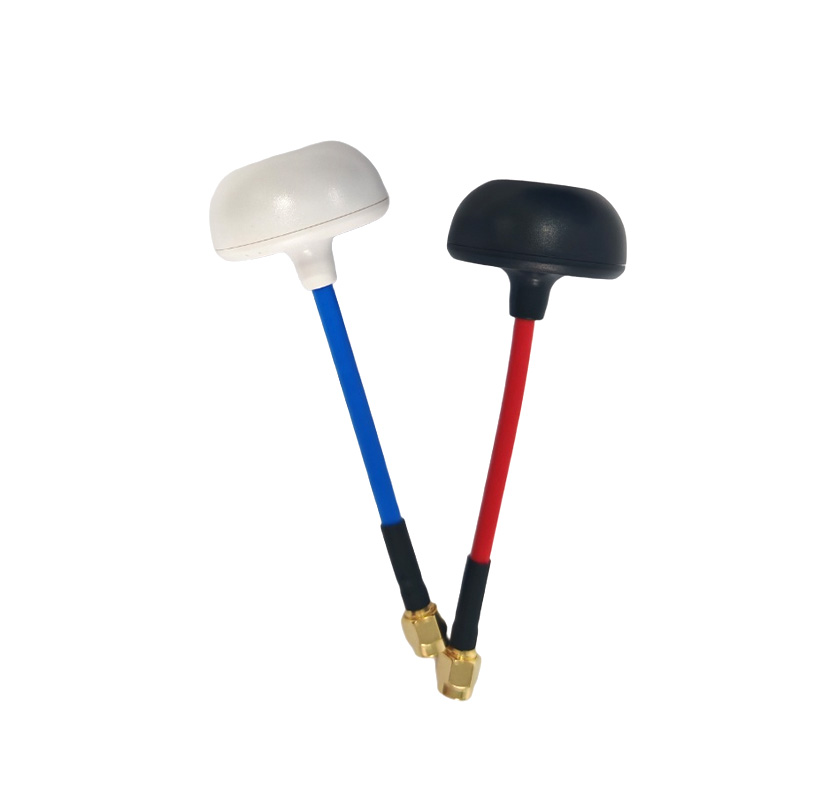
Customized high-precision antenna manufacturing involves tailoring antenna designs to meet specific performance, form factor, and environmental requirements, leveraging advanced engineering and manufacturing techniques to achieve tight tolerances and optimal functionality. This process is critical for applications where off-the-shelf antennas cannot meet unique demands, such as aerospace, defense, medical devices, and high-end industrial systems.
The manufacturing process begins with a detailed analysis of the client’s requirements, including operating frequency (from MHz to GHz ranges), gain (often ±0.5 dBi tolerance), radiation pattern (omnidirectional, directional, or beamforming), impedance (typically 50 ohms with VSWR <1.5:1), and environmental constraints (temperature, humidity, vibration). Engineers use electromagnetic simulation software (e.g., CST Studio Suite, HFSS) to model and optimize the antenna design, iterating on parameters like element geometry, material selection, and feed structure to meet performance targets.
Material selection is a key aspect of precision manufacturing. High-frequency applications may use low-loss substrates like Teflon-based materials (e.g., Rogers 4350) with controlled dielectric constants (±0.02) to ensure consistent signal propagation. For rugged environments, antennas may incorporate aerospace-grade aluminum or titanium for structural components, paired with gold or silver plating to minimize corrosion and improve conductivity. Flexible antennas, designed for conformal mounting, use materials like Kapton or liquid crystal polymers (LCP) that maintain performance under bending or stretching.
Precision fabrication techniques are employed to achieve tight dimensional tolerances (often ±0.01mm). CNC machining is used for metal components, ensuring accurate shaping of reflectors or ground planes. For printed antennas, laser direct structuring (LDS) allows for precise patterning of conductive traces on 3D surfaces, enabling complex geometries that traditional etching cannot achieve. Additive manufacturing (3D printing) is increasingly used for prototyping and low-volume production, allowing for rapid iteration of custom designs.
Testing and validation are rigorous in high-precision manufacturing. Antennas undergo far-field and near-field testing in anechoic chambers to verify radiation patterns, gain, and efficiency. Network analyzers measure impedance matching and return loss, ensuring compliance with specifications. Environmental testing—including thermal cycling, vibration testing, and IP rating certification—validates performance under extreme conditions. Each custom antenna is often serialized, with test data documented to ensure traceability and quality control.
The result is an antenna tailored to the application’s unique needs, whether a compact, high-gain antenna for a drone’s communication system or a ruggedized, wideband antenna for a satellite ground station. Customized high-precision manufacturing ensures that even the most demanding performance requirements are met, enabling innovation in diverse technological fields.















 Home >
  +86 186 8871 1070


