







An antenna is the part that converts electrical signals into radio waves and back again. A mast is the pole or structure that holds an antenna in a useful position. In most installations the two are separate: the mast is structure, and the antenna is the radio component. There are two important exceptions. In medium-wave (AM) broadcasting the steel mast is often the antenna itself. And on a car, "antenna mast" usually means the rod you can see, which is the antenna's radiating element rather than a support.
| Term | What it is | Does it radiate? | Typical example |
|---|---|---|---|
| Antenna | Conductor or structure that turns RF current from a cable into radio waves, and the reverse | Yes, that is its job | Whip, dipole, patch, collinear, Yagi |
| Antenna mast (fixed site) | Pole, tube or guyed structure that raises antennas above obstacles | Not intended to, but it can affect a nearby antenna | Rooftop pole for a TV antenna or an IoT gateway |
| Mast radiator | A mast that is insulated or fed so that the structure itself radiates | Yes | Medium-wave broadcast mast |
| Car antenna mast | The removable or telescopic rod on a vehicle | Yes, it is the radiating element | AM/FM whip, power-antenna mast |
| Vehicle-mounted telescopic mast | Extendable pole on a vehicle that lifts antennas, cameras or lights | Not intended to | Outside-broadcast van, mobile command vehicle |
What an antenna does
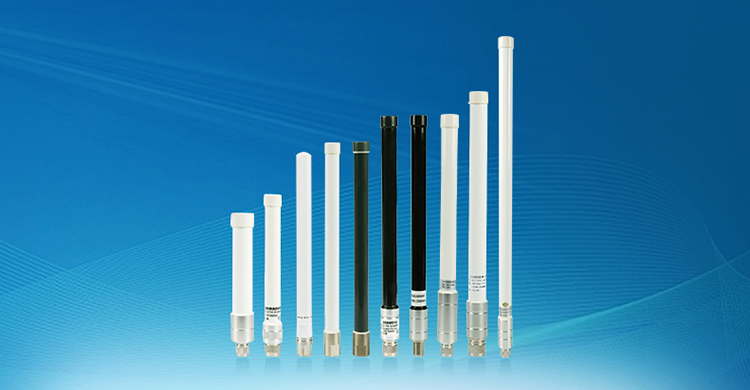
An antenna is the interface between a transmission line and free space. RF current from the radio flows on the antenna's conductors and launches an electromagnetic wave. When receiving, the incoming wave induces a current that travels back along the cable to the receiver. The antenna's frequency range, impedance, gain, radiation pattern and polarization are set by its shape, size and materials. Element size is tied to wavelength; see antenna size and wavelength.
What an antenna mast does
A mast exists to put the antenna where it can do its job: high enough to clear buildings, trees and terrain, in a fixed and known orientation. Height matters most at VHF and higher frequencies, where signals travel mainly by line of sight. Over smooth earth with normal atmospheric refraction, the distance to the radio horizon is roughly 4.12 × √h kilometres, where h is the antenna height in metres. That is about 13 km for a 10 m mast and about 18 km for a 20 m mast. Real coverage also depends on terrain, obstructions in the path, the antenna at the other end and the link budget.
A mast also has mechanical and safety duties:
- Carrying the wind and ice load of the antennas, cables and brackets, with guy wires where the design needs them.
- Grounding and lightning protection for the mast and the coaxial cable, following local electrical and building codes.
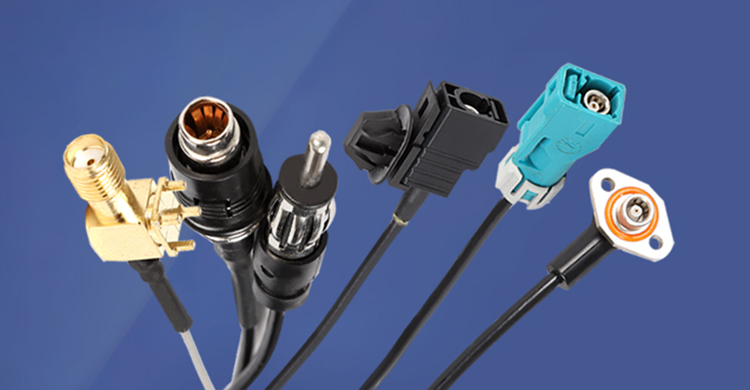
- Cable routing with drip loops, weatherproofed connectors and UV-resistant fixings.
A taller mast usually means a longer feed cable. At UHF and microwave frequencies cable loss rises quickly with length, so a long or thin cable can cancel part of the benefit of the extra height. Check the cable's attenuation at the operating frequency; see how common coaxial cable types compare in signal loss.
Can a mast affect antenna performance?
Yes. Even when it is only meant to be a support, a metal mast close to an antenna is a conductor in the antenna's near field. It can detune the antenna and distort its radiation pattern. Beside an omnidirectional antenna, a metal mast can create stronger and weaker directions (lobes and nulls) whose positions depend on the frequency, the spacing and the mounting geometry. Common practice is to mount omnidirectional antennas on top of the mast, or on a side arm that holds them clear of it, following the antenna maker's mounting guidance. Long guy wires can also resonate and disturb the pattern, which is why they are sometimes split into shorter sections with insulators.
When the mast is the antenna
At medium-wave broadcast frequencies a quarter wavelength is roughly 45 to 140 metres. Broadcasters therefore often use the mast itself as the radiating element. A mast radiator is typically insulated from the ground at its base and fed between the mast and a buried ground system. Other designs feed a grounded mast through a shunt feed or a set of skirt wires, known as a folded unipole. In these installations the difference between mast and antenna disappears.
What is an antenna mast on a car?
On a vehicle, "antenna mast" normally refers to the visible rod: the part that unscrews from the base of a fixed antenna, or the telescopic section of a motorised (power) antenna. Unlike a mast on a building, this mast is the radiating element, so replacing it with a different length or design changes how the antenna works.
For FM radio (87.5–108 MHz in most countries) a free-space quarter wavelength is about 69–86 cm, which is why traditional car whips are of that order; at 76 MHz, the bottom of Japan's FM band, it is about 99 cm. Practical whip lengths also depend on loading and on the installation. Short or "stubby" masts are electrically shortened, often with a helical winding, and many are used with an amplifier in the base. At AM broadcast frequencies the wavelength is hundreds of metres, so every car antenna is electrically very small for AM and depends on the sensitivity of the receiver or base amplifier.
Replacing a car antenna mast
- Match the thread or fitting of the existing base. Vehicle makers use several thread sizes.
- Check whether the base contains an amplifier. An amplified base is usually designed for a particular mast.
- Expect that a much shorter mast may receive FM signals less strongly, even when it is a loaded design made for that base. In strong-signal areas the difference may go unnoticed; in fringe areas it can be audible.
- For a power antenna, the replacement mast usually includes the toothed drive cord, which must suit the motor unit.
- Consider car washes, garage height and wind noise; see methods for reducing car antenna wind noise.
Masts, shark fins and hidden antennas
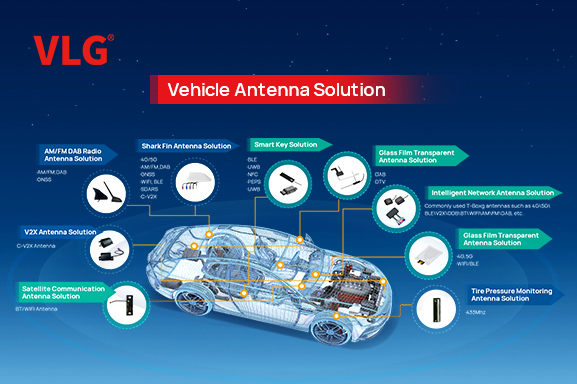
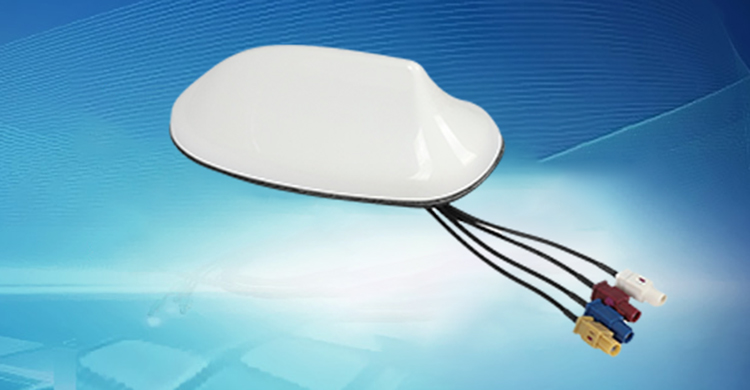
Many newer vehicles have no visible mast. A roof-mounted shark-fin housing commonly holds cellular (4G/5G) and GNSS antennas, and sometimes Wi-Fi, Bluetooth or satellite-radio antennas. The housing is far too short for a quarter-wave FM element, so where a shark fin includes AM/FM reception it uses a small element with an amplifier. Many vehicles place the AM/FM antenna in the rear window or elsewhere instead. For comparisons, see original rod antennas or shark fin antennas, functions of a car shark fin antenna and whether a rod antenna can be replaced with a shark fin.
Vehicle-mounted telescopic antenna masts
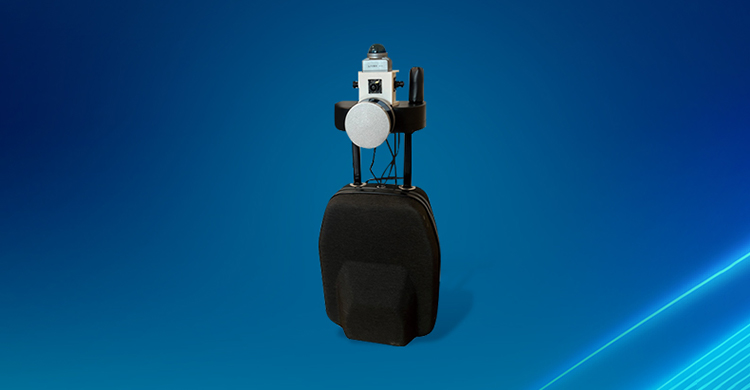
The phrase "vehicle-mounted antenna mast" can also mean something quite different: an extendable pole, pneumatic, electric or manual, fitted to a van, truck or trailer. Raised while the vehicle is parked, it lifts antennas, cameras or lights well above the roof for outside broadcasting, emergency and public-safety communications, events and temporary surveys. Points to plan for:
- The payload and wind rating at full extension, including the antennas and cables.
- Cable management through the sections, so that coaxial cable is not crushed or kinked when the mast retracts.
- A procedure, and where available an interlock, to make sure the mast is lowered before the vehicle moves.
- Overhead power lines. Check for them before raising any mast: contact with or arcing from a power line can be fatal.
Plan an antenna installation with VLG
Planning antennas for a building, a mast or a vehicle? Contact VLG with the frequency bands, the mounting position and the cable route, and we can talk through suitable antenna options.
 +86 186 8871 1070


