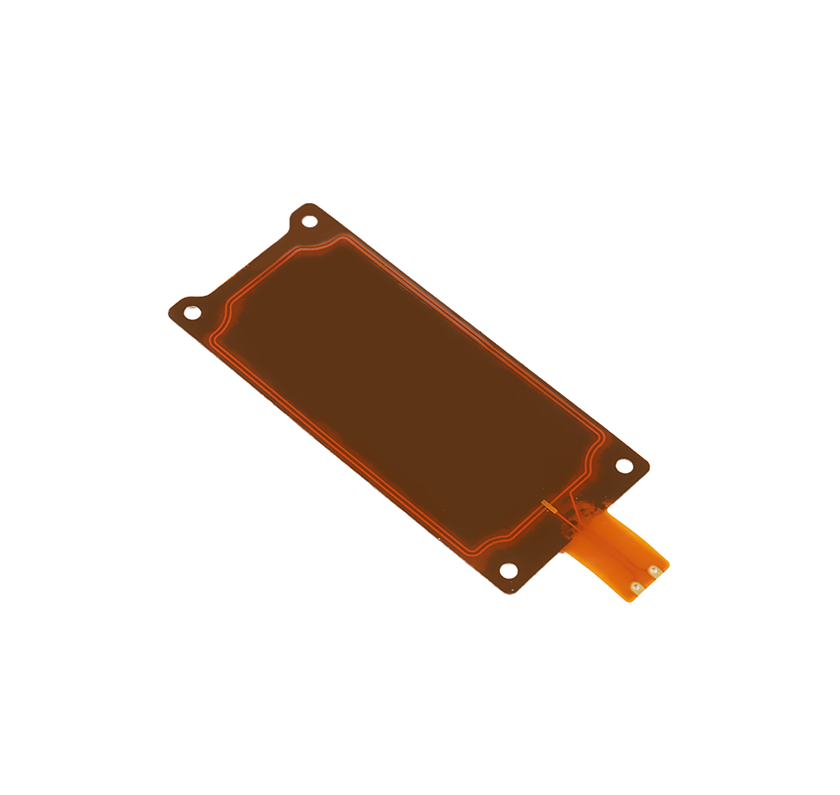
2.4G antennas and 5G antennas are designed for distinct frequency bands and communication requirements, leading to significant differences in performance, design, and applications.
The most fundamental difference lies in their operating frequency ranges. 2.4G antennas work in the 2.4-2.4835 GHz ISM band, a globally unlicensed frequency used for technologies like Wi-Fi (802.11b/g/n), Bluetooth, and Zigbee. In contrast, 5G antennas operate across multiple frequency bands, including sub-6 GHz (3.5 GHz, 26 GHz, 28 GHz) and millimeter-wave (mmWave) bands (24-100 GHz). These higher frequencies enable 5G’s ultra-fast data rates but present unique challenges in signal propagation.
Signal propagation characteristics vary drastically. 2.4G signals have longer wavelengths (around 12.5 cm), allowing them to diffract around obstacles like walls and trees, providing better penetration and longer range—typically up to 100 meters outdoors. This makes 2.4G antennas ideal for home Wi-Fi, smart home devices, and low-data-rate IoT sensors. 5G signals, especially in mmWave bands, have shorter wavelengths (1-10 mm), resulting in poor penetration and higher attenuation. They are easily blocked by buildings, foliage, or even rain, requiring 5G antennas to use advanced technologies like beamforming and massive MIMO (Multiple-Input Multiple-Output) to maintain connectivity over shorter ranges (often 10-30 meters for mmWave).
Design and structure also differ. 2.4G antennas are often simple dipole or monopole designs with omnidirectional radiation patterns, suitable for broad coverage in small areas. They are compact, cost-effective, and integrated into devices like routers or Bluetooth speakers. 5G antennas, however, are more complex. Sub-6 GHz 5G antennas may use phased arrays to steer beams dynamically, while mmWave antennas require large arrays of small elements to focus signals. Many 5G devices, such as smartphones, incorporate multiple antennas (MIMO) to handle high data throughput and mitigate signal loss.
Data capacity and speed are another key distinction. 2.4G antennas support maximum data rates up to 600 Mbps (with 802.11n), sufficient for basic web browsing and streaming. 5G antennas, leveraging wider bandwidths and advanced modulation, can achieve multi-Gbps speeds—up to 10 Gbps in ideal conditions—enabling applications like 4K/8K video streaming, AR/VR, and real-time industrial automation.
Applications reflect these differences: 2.4G antennas dominate low-power, long-range IoT devices, home networks, and consumer electronics. 5G antennas are critical for high-performance applications in urban networks, smart cities, industrial IoT, and next-gen mobile devices, where speed and low latency are paramount.










 Home >
  +86 186 8871 1070


