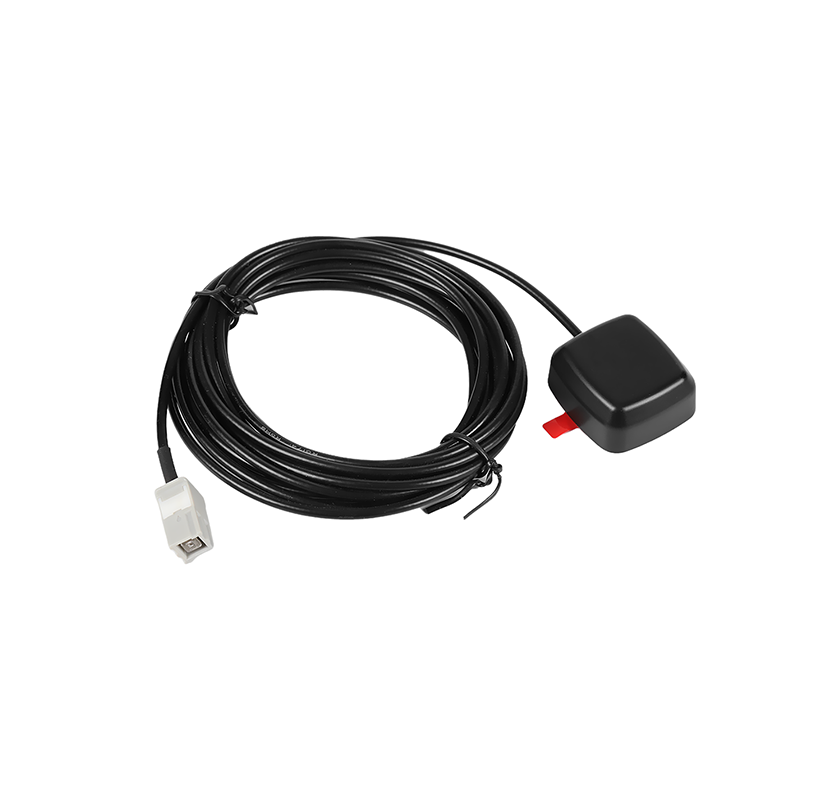
Automotive glass antennas have become increasingly popular due to their aesthetic and functional advantages. They work based on several key principles.
1. Conductive Coating on Glass
Automotive glass antennas typically use a thin, conductive coating applied to the glass surface. This coating is usually made of materials such as indium tin oxide (ITO) or other transparent conductive oxides. The conductive coating acts as the antenna element. When an electromagnetic signal, such as a radio or cellular signal, hits the glass, the conductive coating interacts with the signal. The electrons in the conductive coating start to oscillate in response to the incoming electromagnetic field. This oscillation generates an electrical current, which is then transmitted to the vehicle’s receiver. For example, in a car’s rear window where a glass antenna is often installed, the conductive coating on the glass can pick up FM radio signals. The design of the conductive pattern on the glass is crucial. It is carefully engineered to resonate at specific frequencies, enhancing the antenna’s ability to receive and transmit signals at those frequencies.
2. Signal Tuning and Matching
To optimize the performance of automotive glass antennas, signal tuning and matching techniques are employed. The antenna system includes a tuning circuit that adjusts the electrical properties of the antenna to match the impedance of the receiver or transmitter. This ensures that the maximum amount of power is transferred between the antenna and the electronic device. For instance, if the antenna is used for cellular communication, the tuning circuit will be adjusted to match the frequencies used by the cellular network. By fine – tuning the antenna’s impedance, the efficiency of signal reception and transmission is improved. Additionally, the glass antenna may be designed to be multi – functional, capable of receiving different types of signals such as AM/FM radio, GPS, and cellular signals. This is achieved through the use of multiple conductive patterns on the glass and appropriate tuning circuits for each frequency band.
3. Grounding and Shielding
Proper grounding and shielding are essential for the operation of automotive glass antennas. The glass antenna needs to be electrically grounded to the vehicle’s body. This provides a reference point for the electrical signals and helps in reducing interference. Grounding also helps in dissipating any static electricity that may build up on the glass surface. Shielding is used to protect the antenna from external interference, such as electromagnetic radiation from other vehicles or nearby electronic devices. The vehicle’s body can act as a shield to some extent, but additional shielding materials may be used around the antenna area to further improve its performance. Overall, the combination of these principles allows automotive glass antennas to function effectively and provide reliable signal reception and transmission for various in – vehicle communication systems.













 Home >
  +86 186 8871 1070


