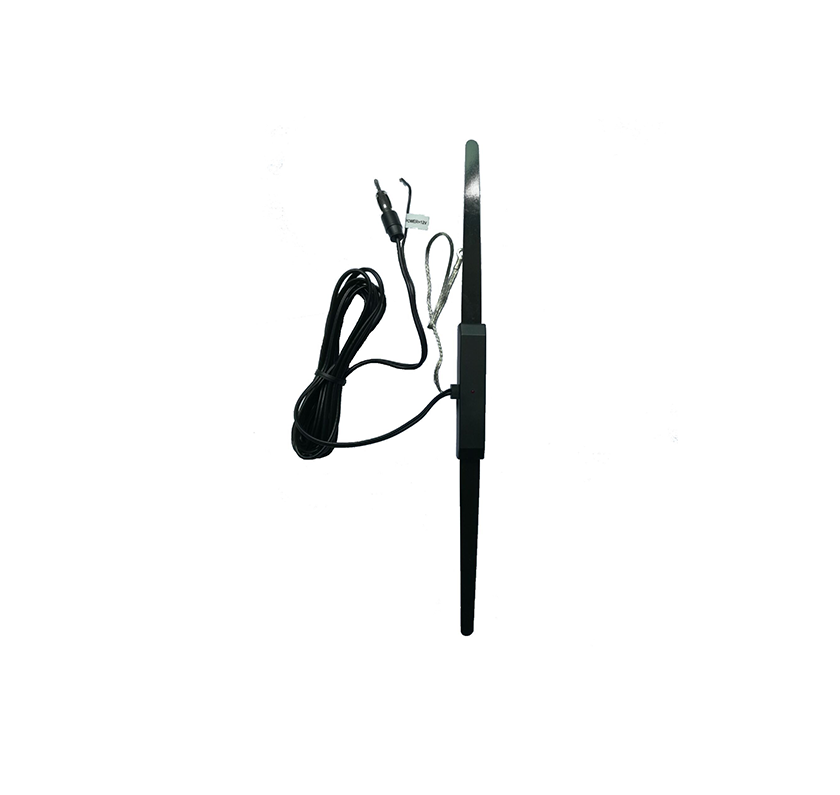
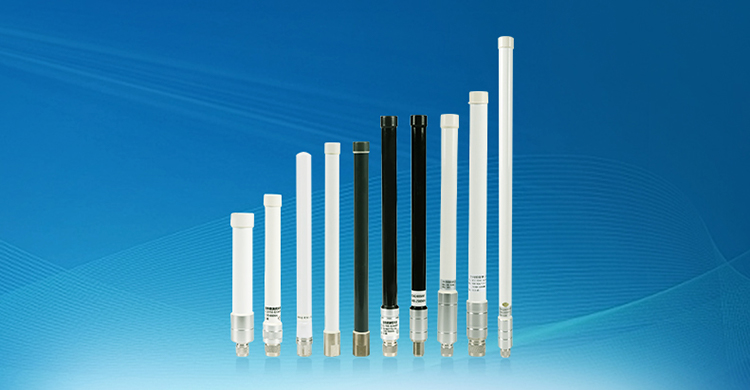
Omnidirectional RFID (Radio Frequency Identification) antennas are essential components in RFID systems, designed to transmit and receive radio signals in a 360° horizontal pattern, enabling seamless identification of RFID tags regardless of their orientation or position relative to the antenna. These antennas operate across RFID frequency bands, including low frequency (LF: 125–134 kHz), high frequency (HF: 13.56 MHz), and ultra-high frequency (UHF: 860–960 MHz), each tailored to specific application requirements.
The omnidirectional radiation pattern is critical for applications where tags are randomly oriented or moving, such as in inventory management, retail checkout, or logistics. Unlike directional RFID antennas, which require tags to pass through a narrow beam, omnidirectional models cover a broad area, reducing the need for precise tag placement and enabling bulk scanning of multiple items simultaneously.
In UHF RFID systems, the most common for long-range applications, omnidirectional antennas typically offer read ranges of 1–10 meters, depending on power output (regulated by regional standards like FCC Part 15 or ETSI EN 302 208). Their gain ranges from 2–6 dBi, balancing coverage area and signal penetration—higher gain models extend read ranges but may sacrifice some omnidirectionality, while lower gain models provide broader coverage with shorter ranges.
HF omnidirectional antennas, operating at 13.56 MHz, are used for short-range applications (up to 1 meter) such as contactless payments, library book tracking, and access control. Their near-field coupling ensures reliable communication even when tags are in close proximity to metal or liquids, a common challenge in UHF systems. LF antennas, with read ranges under 10 cm, are ideal for animal tracking and automotive key fobs, where short-range, high-reliability identification is required.
Design considerations include impedance matching (50 ohms for UHF, 13.56 MHz for HF) to maximize power transfer, and compact form factors for integration into readers, gates, or conveyor systems. For industrial environments, ruggedized enclosures protect against dust, moisture, and mechanical stress, ensuring consistent performance in warehouses or manufacturing lines.
Applications are widespread: in retail, they enable automated inventory counts as products pass through checkout lanes; in logistics, they track packages in warehouses without requiring line-of-sight; in healthcare, they monitor medical equipment and supplies within a facility. Their ability to read multiple tags simultaneously in all directions makes them indispensable for efficient, scalable RFID systems.









 Home >
  +86 186 8871 1070


