
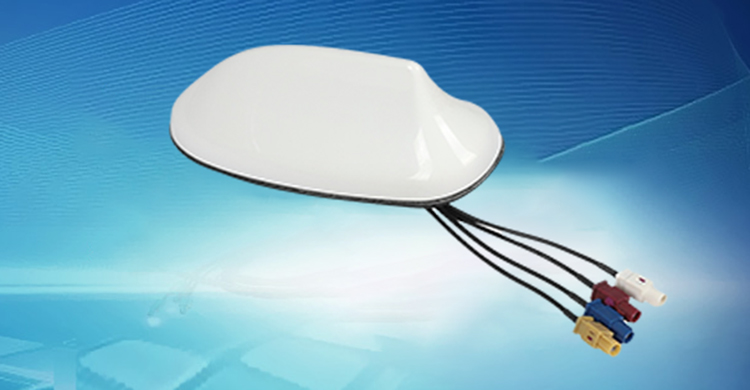
Multiple-Input Multiple-Output (MIMO) antenna arrays are sophisticated systems that use multiple transmitters and receivers to enhance wireless communication performance, leveraging spatial diversity and multiplexing to increase data throughput and reliability. Unlike traditional single-antenna setups, MIMO arrays employ two or more antennas working in tandem, a technology foundational to modern standards such as Wi-Fi 6, 5G, and LTE-Advanced. They are widely used in applications ranging from smartphones and routers to cellular base stations and satellite communication, where high-speed, low-latency connectivity is critical.
The core principle behind MIMO arrays is spatial multiplexing, which allows multiple data streams to be transmitted simultaneously over the same frequency band. By exploiting the unique propagation paths (multipath fading) of radio waves, MIMO systems distinguish between signals arriving at different antennas, effectively doubling or tripling data rates without requiring additional bandwidth. For example, a 4×4 MIMO array (four transmitters and four receivers) can theoretically achieve four times the throughput of a single-antenna system operating on the same frequency.
Spatial diversity is another key advantage, improving signal reliability in challenging environments. If one antenna in the array experiences interference or blockage, others can still receive a clear signal, reducing dropouts and ensuring consistent connectivity. This is particularly valuable in urban areas with dense buildings, indoor spaces with obstacles, or industrial environments with machinery-generated interference. MIMO arrays also use beamforming techniques, dynamically adjusting the phase and amplitude of signals from each antenna to focus energy toward specific devices, further boosting range and reducing interference.
Design considerations for MIMO arrays include antenna spacing and polarization. To maximize diversity, antennas are typically separated by at least half a wavelength (e.g., ~10 cm for 2.4 GHz Wi-Fi), minimizing correlation between received signals. Polarization diversity—using antennas with vertical, horizontal, or circular polarization—further enhances performance by capturing signals that reflect off surfaces at different angles. Modern MIMO arrays, such as those in 5G base stations, may include hundreds of small antennas (massive MIMO), enabling precise beam steering and supporting thousands of concurrent connections in high-density areas like stadiums or city centers.
MIMO antenna arrays represent a leap forward in wireless technology, enabling faster, more reliable communication by harnessing the power of multiple antennas. Their ability to handle high data rates and resist interference makes them indispensable in the era of IoT, streaming, and real-time communication.











 Home >
  +86 186 8871 1070


