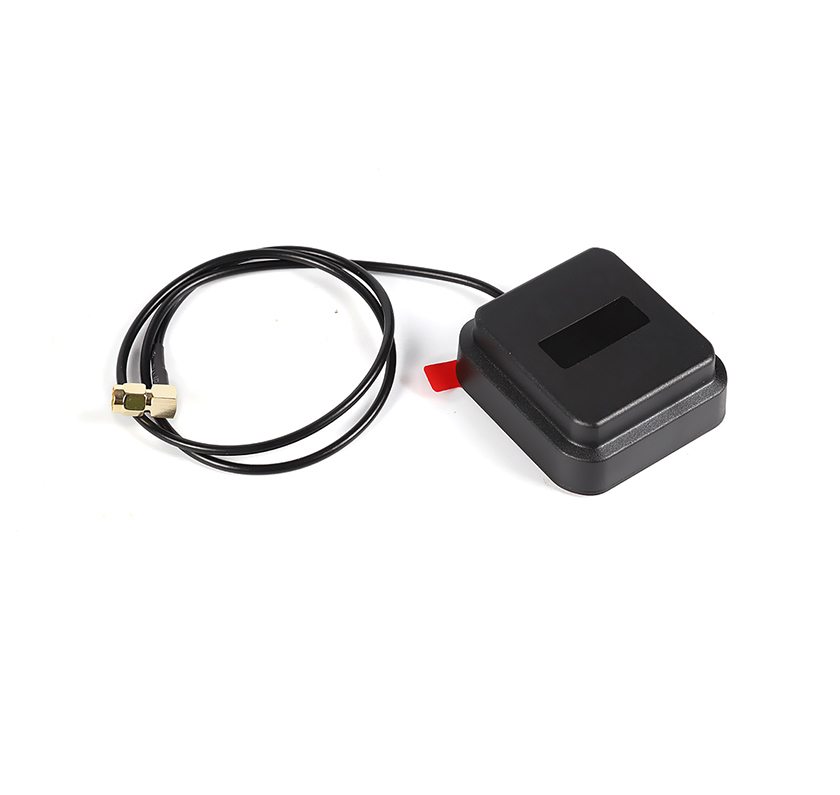
Multi-frequency wireless antenna matching technology is a critical cornerstone in modern wireless communication systems, enabling antennas to operate efficiently across multiple frequency bands while maintaining optimal performance. As wireless standards evolve—from 4G LTE and WiFi 6 to emerging 5G and beyond—devices increasingly require seamless operation across diverse spectrums, including sub-6 GHz and millimeter-wave bands. This technology addresses the inherent challenge of antenna impedance variation across frequencies, which can lead to signal reflection, reduced efficiency, and degraded communication quality.
At its core, antenna matching involves designing networks that balance the impedance of the antenna with that of the transceiver (typically 50 ohms), minimizing signal loss and maximizing power transfer. For multi-frequency systems, this requires sophisticated matching networks capable of adapting to varying impedance characteristics at each target frequency. Techniques such as lumped-element matching (using capacitors, inductors, and resistors), distributed-element matching (utilizing transmission lines and stubs), and adaptive matching (incorporating tunable components like varactors or MEMS switches) are commonly employed. Adaptive matching, in particular, has gained traction in dynamic environments, allowing real-time adjustments to counteract impedance shifts caused by environmental factors (e.g., weather, nearby objects) or device movement.
Challenges in multi-frequency matching include size constraints, as integrating components for multiple bands can increase antenna footprint, and cross-band interference, where matching for one frequency may degrade performance at another. Advanced design tools, such as electromagnetic simulation software (e.g., HFSS, CST Studio Suite), have become indispensable for optimizing component placement and network topology to mitigate these issues. Additionally, machine learning algorithms are increasingly used to model complex impedance behaviors and automate the design of multi-band matching networks, reducing development time and improving efficiency.
Practical applications span consumer electronics (smartphones, routers), IoT devices, and industrial systems, where reliable multi-band communication is essential. For example, modern routers equipped with WiFi 6E rely on multi-frequency matching to support 2.4 GHz, 5 GHz, and 6 GHz bands simultaneously, ensuring high-speed connectivity across different ranges and device types. As future networks demand operation across even more bands—including those allocated for 6G—multi-frequency antenna matching technology will play a pivotal role in enabling ubiquitous, high-performance wireless communication.












 Home >
  +86 186 8871 1070


