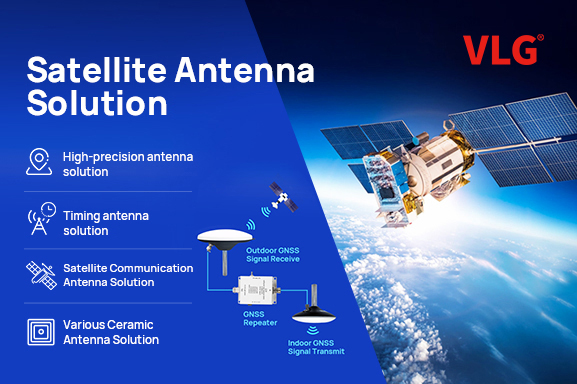
A GNSS timing antenna receives satellite signals for a timing receiver. It is the RF entry point of a synchronization system, rather than a complete clock or time server. Selecting the antenna together with the receiver, cable and mounting arrangement helps establish a dependable signal path for communications and industrial timing equipment.
Key specifications and selection criteria
| Item |
Details |
| RF selection |
Supported GNSS bands; active gain; noise figure |
| Electrical compatibility |
Bias voltage, current and receiver input limits |
| Installation review |
Sky visibility, cable loss, connector sealing and mounting |
| System review |
Timing receiver behavior and interruption requirements |
Begin with the timing receiver
List the satellite bands the receiver supports, its antenna bias supply and the acceptable active gain range. A GNSS antenna label does not identify all of these requirements. Request the relevant frequency coverage, noise figure and amplifier data for the selected antenna.
Evaluate the complete cable path
Cable loss and connectors affect the signal delivered to the receiver. Compare the antenna amplification with the installed feed arrangement and receiver limits. Where the system accounts for cable delay, use the actual cable configuration and the receiver manufacturer’s setup guidance.
Choose a suitable outdoor location
Provide useful sky visibility while considering building obstructions, reflections and nearby transmitting equipment. Define the mounting hardware, cable support and enclosure sealing for the location. The antenna housing, connectors and cable entry all contribute to the installed environmental performance.
Plan for loss of satellite reception
Antenna selection cannot ensure that satellite signals will always be available. The timing system’s behavior during an interruption depends on the receiver and clock design. Establish the required operating behavior with the synchronization-system supplier and verify the installed reception conditions.
Request a configuration-specific proposal
Share the receiver model, required bands, cable length, installation location and environmental requirements. VLG can review these inputs for a suitable timing antenna arrangement. Request the specification and test data for the offered version instead of applying a general product-family claim to every installation.
Frequently asked questions
Does the antenna generate a precise time output?
The antenna supplies RF signals. A timing receiver and clock system generate and distribute the time outputs.
Does a salt-spray test establish a fixed outdoor service life?
A laboratory test result should be interpreted within its test method and conditions; it is not a direct service-life guarantee.
Explore related gnss antenna products for your project.
Discuss your antenna project with VLG
Send VLG your required frequency bands, radio or receiver model, available installation space and cable requirements. Include the target application and order quantity so the team can review a suitable antenna configuration.
Request antenna specifications, samples or an OEM quotation.











 Home >
  +86 186 8871 1070


