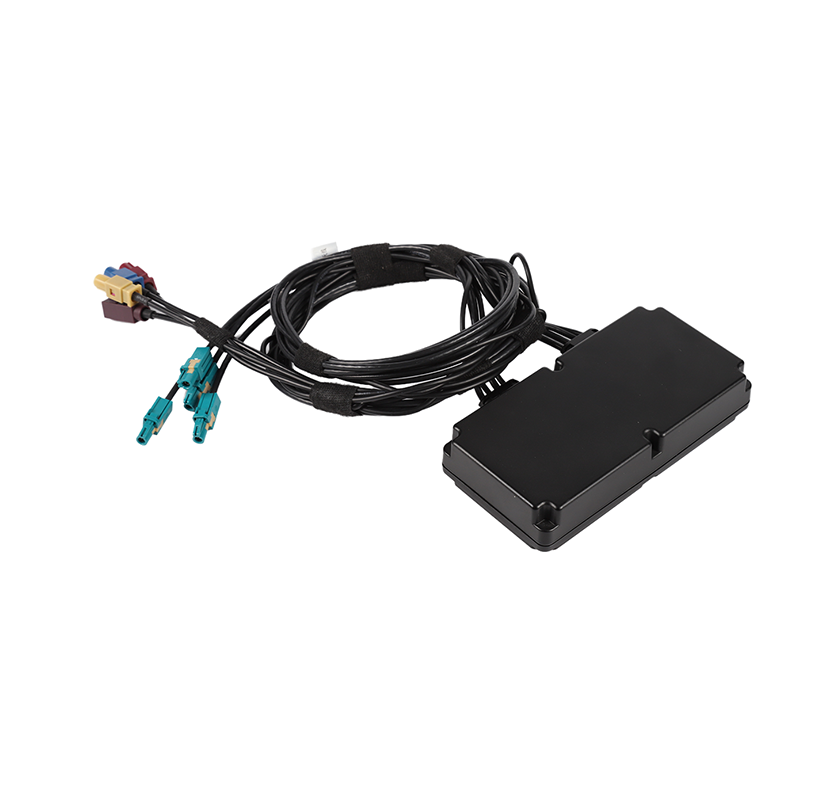
The evolution from 4G to 5G brings about significant differences in antenna technology. One of the most prominent distinctions lies in the frequency bands they operate on. 4G networks typically utilize lower frequency bands, ranging from around 700 MHz to 2.6 GHz. These frequencies offer relatively long – range propagation and better penetration through obstacles such as buildings and foliage. In contrast, 5G operates across a broader spectrum. Sub – 6 GHz frequencies, which are also used in 5G, provide a balance between range and capacity. However, 5G also makes use of millimeter – wave (mmWave) frequencies, typically in the 24 GHz to 52 GHz range. These high – frequency bands offer extremely high data transfer rates but have shorter propagation distances and are more susceptible to blockages.
In terms of antenna design, 5G antennas often incorporate Massive Multiple – Input Multiple – Output (MIMO) technology. Massive MIMO in 5G antennas can have a large number of antenna elements, sometimes in the dozens or even hundreds. This allows for better spatial multiplexing, where multiple data streams can be transmitted and received simultaneously in different directions. In comparison, 4G MIMO antennas usually have a smaller number of antenna elements, typically up to 8 in many consumer – facing devices. The increased number of elements in 5G antennas enables higher data rates, improved signal quality, and better interference mitigation.
Another difference is in the form factor and size. Due to the use of higher frequencies in 5G, the antenna elements can be physically smaller. This has led to more compact 5G antenna designs. For example, in mobile devices, 5G antennas can be integrated more easily into smaller spaces without sacrificing performance. 4G antennas, operating at lower frequencies, generally require larger antenna elements, resulting in relatively larger – sized antennas in some cases.
The beamforming capabilities of 5G and 4G antennas also vary. 5G antennas are designed with advanced beamforming techniques. They can precisely direct the signal beam towards the user equipment, maximizing the signal strength and minimizing interference. This is crucial in mmWave frequencies where the signal has limited range. 4G antennas also have beamforming features, but the precision and adaptability of 5G beamforming are more advanced, allowing for better handling of complex wireless environments with multiple users and interference sources.









 Home >
  +86 186 8871 1070


