








 Home >
FAQs – Cables
0–18 GHz Rating Cables
“0–18 GHz” rating means the cable can reliably carry RF signals across this entire frequency range with acceptable insertion loss and return loss. It’s commonly used in wireless systems, test equipment, and high-frequency applications like radar or satellite communication.
- Diameter: Smaller-diameter cables (0.047, 0.81 Coax) are more flexible but typically have higher attenuation.
- Shielding: RG-series cables (RG-174, RG-316) offer moderate loss and good flexibility.
- TGC-200: Often designed for ultra-low loss at higher frequencies, though less flexible than smaller cables.
- 3/4 inch Brass Mount: Often used in automotive pass-throughs for secure panel mounting.
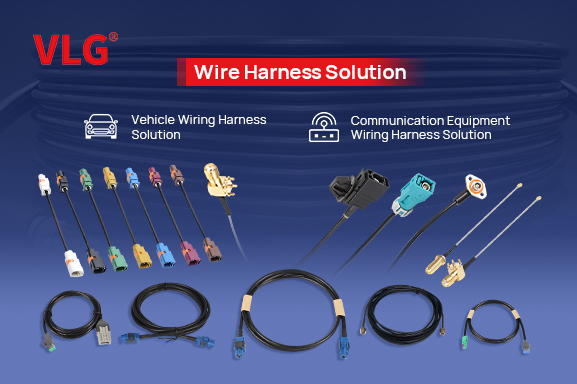
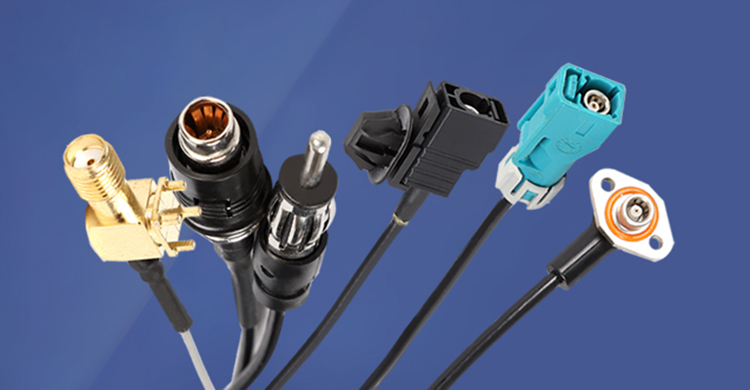
- FAKRA CODE C Blue: Automotive-grade connector keyed for certain frequency bands.
- Hirose U.FL / IPEX MH4: Ultra-miniature connectors for tight spaces (laptops, IoT).
- N Type, SMA: Standard threaded connectors for outdoor (not all SMA Connector are for outdoor) or higher-power applications.
- TS9 ST: Snap-on connector often found in mobile broadband devices.
- Straight vs. Right Angle: Determines how the cable exits the connector, influencing space usage and bend radius.
- Male (M) vs. Female (F): Must match the device’s port to ensure proper mating and prevent damage or mismatch.
Cable length directly affects insertion loss—longer cables introduce more attenuation. Specifying length ranges helps users select the shortest feasible cable to maintain signal quality, especially above a few GHz where losses increase rapidly and impact device performance.
- Stripped: The cable is prepped with exposed conductor and shield but has no connector attached, allowing custom termination later.
- SMB: A SubMiniature B snap-on connector, used for quick, low-power RF connections.
Ethernet Cables
“Plug to Plug”means both ends of the cable terminate in male RJ45 plugs, forming a standard patch cable. This is typically used to connect devices (e.g., computers, routers, switches) without needing an intermediate coupler or jack.
Higher network speeds (e.g., 10 Gbps) demand cables with better shielding, tighter twists, and lower crosstalk, such as Cat6A or Cat7. For standard home or small office use at 1 Gbps, Cat5e or Cat6 is often sufficient.
Cat6A supports up to 10 Gbps speeds at 100 meters and improved crosstalk mitigation. In contrast, Cat5 or Cat5e typically supports up to 1 Gbps. Cat6A’s thicker insulation and tighter twists reduce electromagnetic interference, making it more reliable for higher-bandwidth applications.
An 8p8c (eight-position, eight-contact) RJ45 connector is the modular plug used in Ethernet cabling. It became the standard due to its simplicity, low cost, and compatibility across multiple generations of network equipment.
 +86 186 8871 1070


