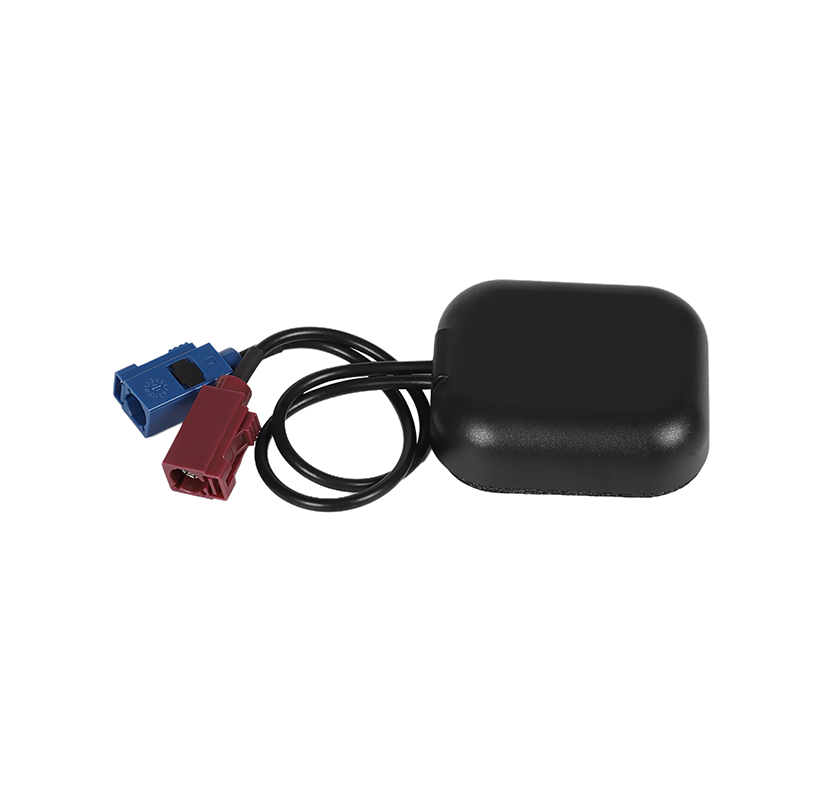
Antenna power gain is a crucial parameter in the performance evaluation of an antenna. It represents the ability of an antenna to concentrate the radiated power in a particular direction compared to an isotropic radiator. An isotropic radiator is a theoretical antenna that radiates power uniformly in all directions.
Definition and Calculation
Antenna power gain, usually denoted as (G), is defined as the ratio of the radiation intensity in a given direction from the antenna to the radiation intensity of an isotropic radiator when both are fed with the same input power. Mathematically, it can be expressed in decibels (dB) as (G = 10log_{10}(frac{U}{U_0})), where (U) is the radiation intensity of the antenna in the direction of interest and (U_0) is the radiation intensity of an isotropic radiator. The gain of an antenna is a measure of how much more power is radiated in a specific direction compared to the uniform radiation of an isotropic source. For example, if an antenna has a gain of 10 dB in a particular direction, it means that the power radiated in that direction is 10 times greater than what would be radiated by an isotropic antenna with the same input power. Factors Affecting Power Gain
The design of the antenna plays a significant role in determining its power gain. Antennas with complex geometries, such as parabolic dish antennas or Yagi – Uda antennas, are designed to achieve high gain. A parabolic dish antenna, for instance, works by reflecting and focusing the electromagnetic waves towards a specific direction. The larger the dish size, the higher the gain it can achieve. The Yagi – Uda antenna consists of multiple elements, including a driven element, reflector, and directors. The proper arrangement and tuning of these elements can enhance the antenna’s ability to direct the radiation in a particular direction, thus increasing the power gain. The frequency of operation also affects the power gain. Different antennas are optimized for specific frequency bands. An antenna designed for a particular frequency will have its maximum gain at that frequency. As the frequency deviates from the design frequency, the gain may decrease.
Applications of High – Gain Antennas
High – gain antennas are widely used in various applications. In satellite communication, high – gain antennas on Earth stations are used to receive weak signals from satellites. These antennas can focus the received power, improving the signal – to – noise ratio. In long – range wireless communication, such as point – to – point links between two distant locations, high – gain antennas are employed to increase the communication range. They can transmit the signal over longer distances by concentrating the power in the desired direction. In cellular networks, high – gain antennas can be used to improve the coverage in areas with low signal strength, such as rural or remote regions.













 Home >
  +86 186 8871 1070


