
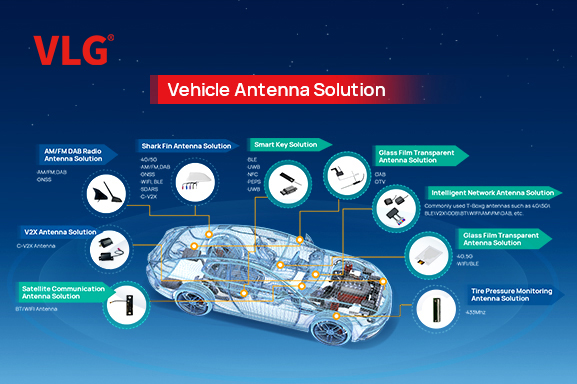
Vehicle-mounted antennas and receiving systems form a critical interface between vehicles and external communication networks, enabling functions such as radio broadcasting, GPS navigation, cellular communication, and vehicle-to-everything (V2X) connectivity. These systems are engineered to work in tandem, overcoming challenges like multipath fading, Doppler shift, and interference from the vehicle’s own electronics to ensure reliable signal reception.
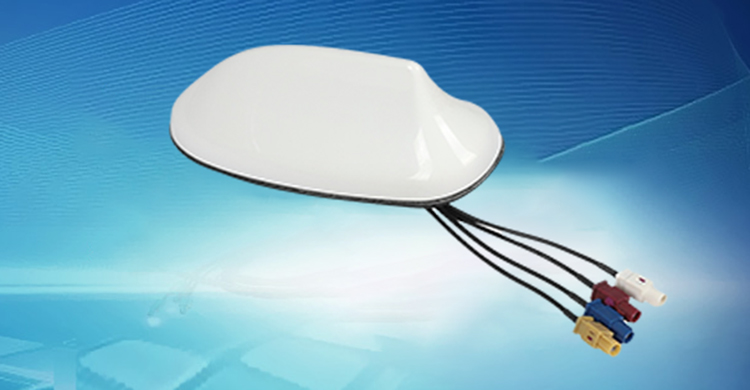
The antenna array in a modern vehicle typically includes multiple specialized antennas, each optimized for a specific frequency band or application. For example, AM/FM radio antennas, often integrated into the windshield or roof, use long wires or loop designs to capture low-frequency signals (530 kHz-108 MHz). GPS antennas, usually mounted on the dashboard or roof, employ patch antenna designs with right-hand circular polarization (RHCP) to receive signals from satellites in the L1 (1575.42 MHz) and L5 (1176.45 MHz) bands, ensuring accurate positioning even in urban canyons. Cellular antennas (4G LTE/5G) operate in higher frequency ranges (600 MHz-6 GHz) and may use MIMO technology to enhance data rates, while V2X antennas support dedicated short-range communication (DSRC) in the 5.9 GHz band for vehicle-to-vehicle (V2V) and vehicle-to-infrastructure (V2I) communication.
The receiving system processes the signals captured by the antennas, incorporating components like filters, amplifiers, and demodulators to extract useful data. Low-noise amplifiers (LNAs) are placed close to the antennas to boost weak signals before they are degraded by cable losses, with noise figures typically below 1.5 dB for high sensitivity. Filters, such as SAW (Surface Acoustic Wave) or BAW (Bulk Acoustic Wave) filters, suppress interference from adjacent frequency bands—critical in vehicles where multiple antennas and electronic systems operate in close proximity.
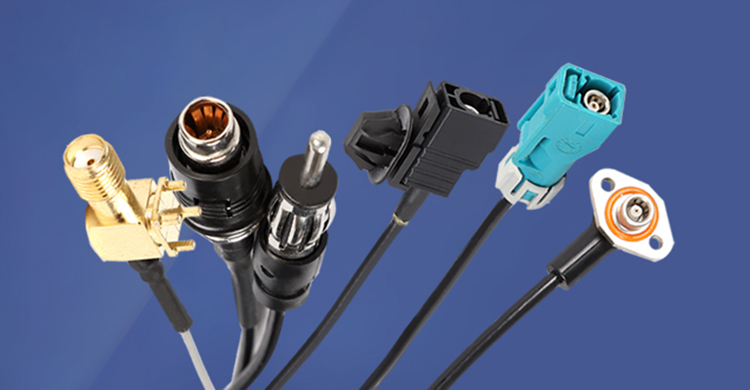
Integration with the vehicle’s electronics is seamless, with the receiving system connected to control units via interfaces like coaxial cables, Ethernet, or CAN bus. A central processing unit coordinates data from different antennas, combining GPS location with cellular data for navigation or aggregating V2X messages to enhance driver safety (e.g., collision warnings). Advanced systems use machine learning algorithms to adaptively adjust antenna performance, such as switching between antennas or beamforming, to maintain connectivity in challenging environments.
Environmental robustness is a key design consideration. Both antennas and receiving components are tested to withstand temperature extremes (-40°C to +85°C), vibration (up to 20 G), and moisture (IP6K9K rating), ensuring reliability in all driving conditions. Additionally, electromagnetic compatibility (EMC) testing ensures that the system does not interfere with other vehicle electronics, such as radar or ADAS (Advanced Driver Assistance Systems) sensors.
As vehicles become more connected and autonomous, the role of vehicle-mounted antennas and receiving systems continues to expand, enabling new features like over-the-air updates, real-time traffic management, and enhanced safety through V2X communication. Their ability to reliably capture and process signals in dynamic environments is essential for the future of intelligent transportation.









 Home >
  +86 186 8871 1070


