
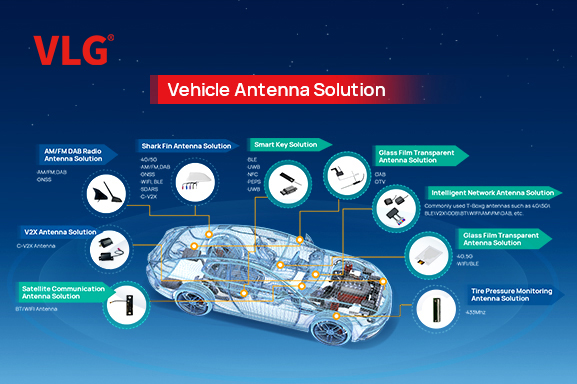
Installing lightning-protected vehicle-mounted antennas requires a strategic combination of hardware selection, grounding techniques, and placement to minimize the risk of damage from lightning strikes and electrical surges. Vehicles, especially those operating in open areas (e.g., trucks, emergency vehicles, or off-road vehicles), are vulnerable to lightning due to their elevated position and metal frames, which can act as conductors. Proper installation ensures that any lightning-induced current is safely diverted away from sensitive electronics, such as radios, GPS modules, or onboard computers.
The first step in lightning protection is selecting an antenna designed with built-in surge suppression. These antennas often feature gas discharge tubes (GDTs) or metal-oxide varistors (MOVs) at their base, which act as voltage clamps. When a surge exceeds a threshold (typically 200-300 volts), the GDT conducts the excess current to ground, preventing it from traveling up the coaxial cable to the transceiver. For example, a truck-mounted CB antenna with an integrated GDT can withstand transient voltages up to 10,000 volts, common in indirect lightning strikes.
Grounding is critical for dissipating lightning energy. The antenna mount must be securely connected to the vehicle’s metal chassis using a low-resistance conductor (e.g., 4-gauge copper wire). This creates a direct path for current to flow from the antenna to the chassis, which acts as a large ground plane. Additionally, the coaxial cable connecting the antenna to the transceiver should be shielded, with the shield bonded to both the antenna mount and the transceiver’s ground. This minimizes the risk of voltage induction in the cable during a strike.
Placement of the antenna also affects lightning protection. Mounting the antenna on the highest point of the vehicle (e.g., the roof or cab) reduces the chance of a direct strike on other parts of the vehicle but requires robust grounding. However, in areas with frequent lightning, some installations use a secondary lightning rod mounted near the antenna to act as a sacrificial target, diverting strikes away from the antenna itself. The rod should be taller than the antenna and connected to a separate ground rod driven into the earth (for stationary vehicles) or to the vehicle’s frame (for mobile use).
Finally, surge protectors should be installed at the transceiver end of the coaxial cable as an additional layer of defense. These devices, which may combine GDTs and MOVs, clamp any residual voltage that bypasses the antenna’s protection. Regular inspection of all connections, including checking for corrosion or loose fittings, ensures the grounding system remains effective over time. By integrating these measures, lightning-protected vehicle-mounted antenna installations safeguard both equipment and passengers from the destructive effects of electrical surges.














 Home >
  +86 186 8871 1070


