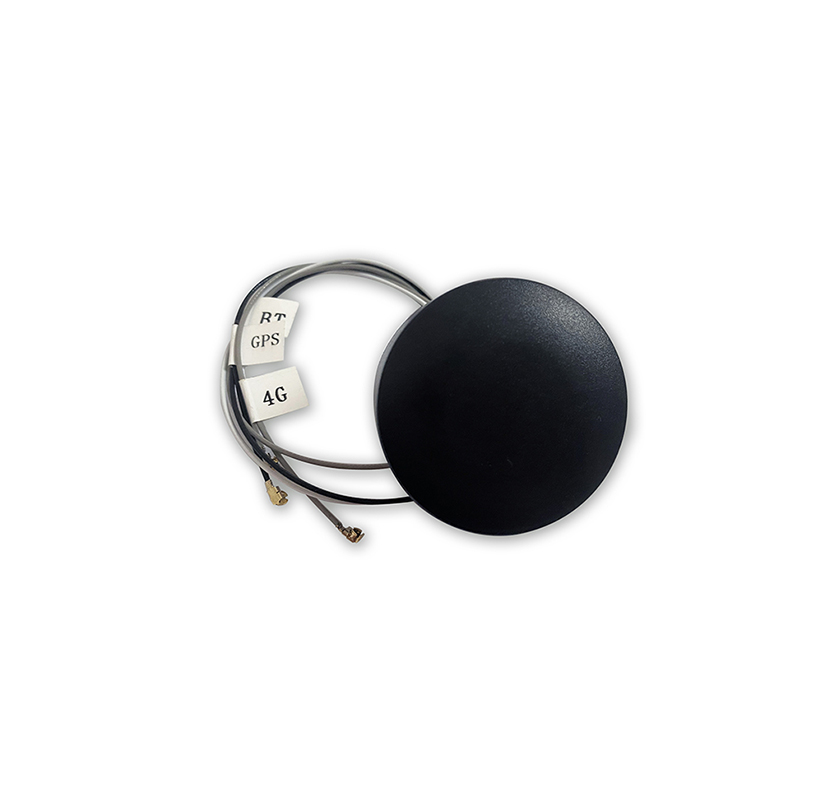
Biconical antennas are a type of omnidirectional antenna that have a unique shape and offer several advantages in certain applications. They consist of two conical conductors placed back – to – back with a small gap between them.
The geometry of the biconical antenna gives it a wide – band characteristic. The two conical structures interact with the electromagnetic waves in a way that allows the antenna to operate over a broad range of frequencies. This is in contrast to some other antennas that may be designed for a specific narrow frequency band. For example, a biconical antenna can be used in applications where a wide range of frequencies need to be received or transmitted, such as in communication systems that operate in multiple frequency bands or in electromagnetic compatibility (EMC) testing. In EMC testing, the biconical antenna can be used to measure the electromagnetic radiation emitted by electronic devices over a wide frequency spectrum.
The omnidirectional radiation pattern of the biconical antenna is another important feature. It radiates or receives electromagnetic waves evenly in all directions in the plane perpendicular to the axis of the cones. This makes it suitable for applications where a non – directional response is required. For instance, in a wireless sensor network deployed in an area where the location of the sensor nodes is not fixed, a biconical antenna can be used to ensure that the nodes can communicate with each other regardless of their orientation.
The design of the biconical antenna also affects its impedance characteristics. The shape and size of the cones, as well as the distance between them, can be adjusted to achieve a desired impedance. This is crucial for proper matching with the transmission line and the associated electronic components. A well – designed biconical antenna can have a relatively stable impedance over its operating frequency range, which helps in efficient power transfer. In addition, the biconical antenna can be constructed using a variety of materials. The conical conductors are often made of metal, such as aluminum or copper, for good electrical conductivity. The overall structure can be supported by a non – conductive material to isolate the antenna from the surrounding environment. In summary, biconical antennas are valuable in applications that require wide – band operation and omnidirectional radiation patterns, and their design can be optimized to meet specific impedance and performance requirements.

















 Home >
  +86 186 8871 1070


