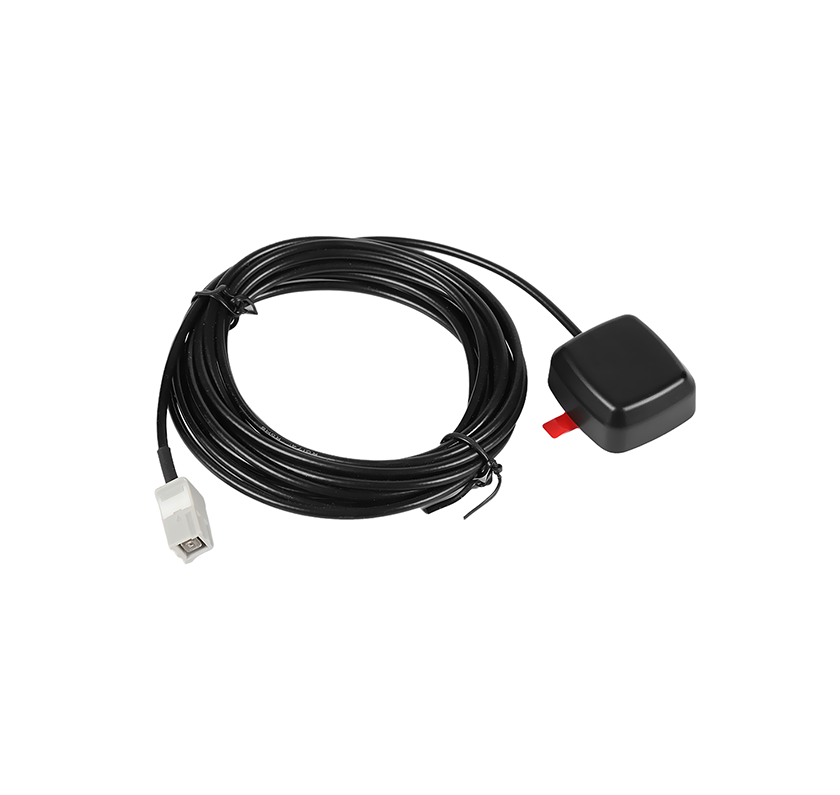
The IoT ecosystem relies on a diverse range of antennas, each tailored to specific frequency bands, form factors, and performance requirements. Below is a detailed overview of the most common antenna types and their applications:
1. Planar Inverted-F Antenna (PIFA)
Design: A compact antenna formed by a planar radiator connected to a ground plane via a shorting pin, resembling an inverted “F”.
Frequency Range: 0.8-6 GHz (covers Wi-Fi, Bluetooth, LTE).
Applications: Smartphones, wearables, and small IoT devices. For example, a PIFA in a smartwatch can cover both 2.4 GHz Bluetooth and 5 GHz Wi-Fi with a footprint of <100 mm².
Advantages: Low profile, easy integration with PCBs, and good impedance matching.
Limitations: Sensitive to ground plane size; performance degrades in metal-enclosed devices.
2. Monopole/Dipole Antennas
Design: A monopole is a single radiating element (e.g., a metal rod), while a dipole has two symmetrical elements.
Frequency Range: Sub-GHz to 5 GHz.
Applications: Industrial sensors (monopole for sub-GHz LoRa), TV white space devices (dipole for 470-960 MHz).
Advantages: Omnidirectional radiation, simple design, and low cost.
Example: A 915 MHz monopole antenna in a smart agriculture sensor provides 360° coverage for long-range data transmission to a gateway.
3. Patch Antennas
Design: A rectangular or circular metal patch on a dielectric substrate, fed by a microstrip line or coaxial probe.
Frequency Range: 1-40 GHz (common in 2.4 GHz/5 GHz Wi-Fi, GPS).
Applications: Fixed IoT devices like gateways, drones, and outdoor sensors. A patch antenna on a solar-powered weather station can provide directional coverage to a nearby base station.
Advantages: High gain, compact size, and easy customization for specific radiation patterns.
Variants: Slotted patch antennas for multi-band operation, stacked patches for higher gain.
4. Helical Antennas
Design: A wire wound in a helical shape, often used with a ground plane.
Frequency Range: 0.1-30 GHz (ideal for circular polarization).
Applications: Satellite IoT (e.g., SpaceX Starlink terminals), RFID tags, and medical implants.
Advantages: Circular polarization reduces signal degradation from multipath fading; high efficiency in narrow bands.
Example: A helical antenna on a maritime IoT tracker uses circular polarization to maintain robust connectivity with satellite networks despite ship motion.
5. Chip Antennas
Design: Pre-fabricated ceramic or metal antennas in a compact package, often surface-mounted on PCBs.
Frequency Range: 0.8-6 GHz (covers Zigbee, Wi-Fi, LTE-M).
Applications: Miniature IoT devices like smart tags, earbuds, and medical sensors. A 2.4 GHz chip antenna in a Bluetooth-enabled pill monitor measures <5 mm³.
Advantages: Plug-and-play integration, consistent performance, and rugged construction.
Limitations: Limited tunability; requires precise matching to the PCB layout.
6. Yagi-Uda Antennas
Design: A directional antenna with a driven element, reflector, and directors for high gain.
Frequency Range: 0.3-30 GHz.
Applications: Long-range IoT (e.g., 4G/LTE base stations, smart city sensors). A Yagi antenna on a streetlight sensor can transmit data up to 5 km to a central hub.
Advantages: High gain (10-15 dBi), narrow beamwidth, and low side lobes.
Limitations: Bulky design; requires precise alignment for optimal performance.









 Home >
  +86 186 8871 1070


