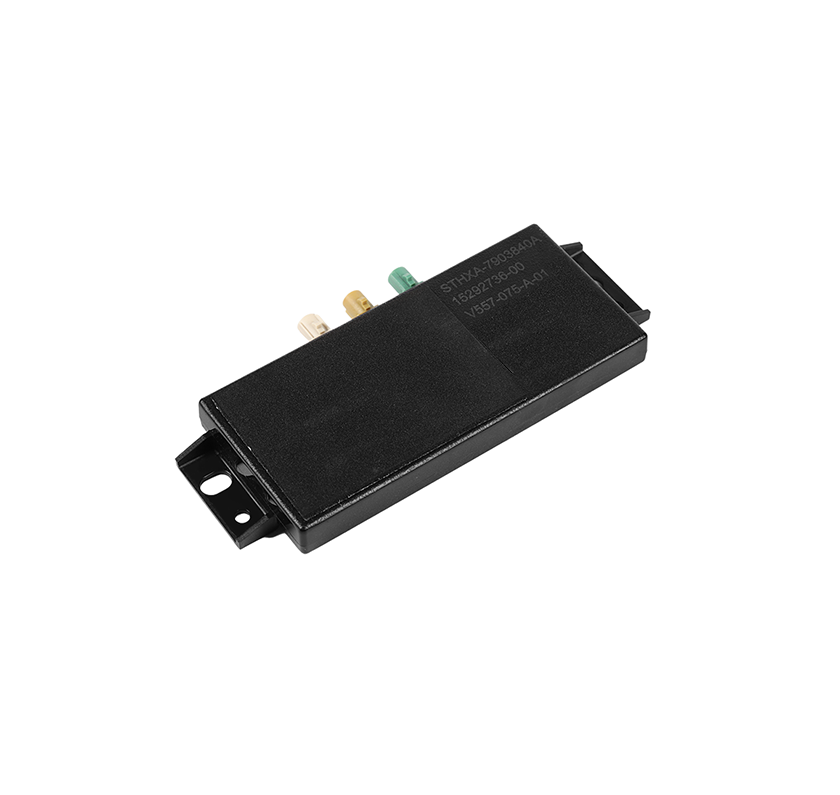
There are four main schemes for 5G mobile phone antennas, each with its own advantages and suitable for different design requirements and performance considerations.
The first scheme is the planar inverted – F antenna (PIFA) with modifications for 5G. PIFA antennas are widely used in mobile devices due to their compact size and simple structure. For 5G, PIFA antennas are optimized to operate at the higher frequencies required by 5G networks. This may involve adjusting the antenna’s dimensions, adding additional radiating elements, or using new materials to enhance its impedance matching and radiation efficiency.Modified PIFA antennas can provide good performance in terms of bandwidth and radiation pattern, making them suitable for mid – range 5G frequency bands and enabling reliable communication for mobile users.
The second scheme is the loop antenna – based design. Loop antennas offer the advantage of multi – band operation, which is crucial for 5G mobile phones as they need to support a wide range of frequencies. By carefully designing the shape and size of the loop, these antennas can be tuned to operate efficiently at both sub – 6GHz and mmWave frequencies. Loop antennas can also be easily
integrated into the phone’s structure, for example, around the edges of the device, and they can provide omnidirectional or directional radiation patterns depending on the design, ensuring good signal reception in different scenarios.
The third scheme involves the use of monopole antennas with advanced techniques. Monopole antennas are simple and cost – effective. In the context of 5G, monopole antennas are combined with techniques such as antenna diversity and reconfigurability. Antenna diversity uses multiple monopole antennas to improve the reliability of the communication link by reducing the impact of signal fading. Reconfigurable monopole antennas can change their operating frequency,radiation pattern, or polarization characteristics, allowing the phone to adapt to different network conditions and optimize the communication performance.
The fourth scheme is the use of array antennas, especially for mmWave frequencies. Array antennas consist of multiple antenna elements arranged in a specific pattern. In 5G mobile phones, mmWave array antennas are used to take advantage of the high – speed data transfer capabilities of mmWave frequencies.These antennas can use beamforming techniques to focus the signal towards the base station, compensating for the short range and high attenuation of mmWave signals. Array antennas can also improve the data throughput and link quality,enabling users to enjoy high – speed 5G services such as fast downloads and smooth video streaming.










 Home >
  +86 186 8871 1070


