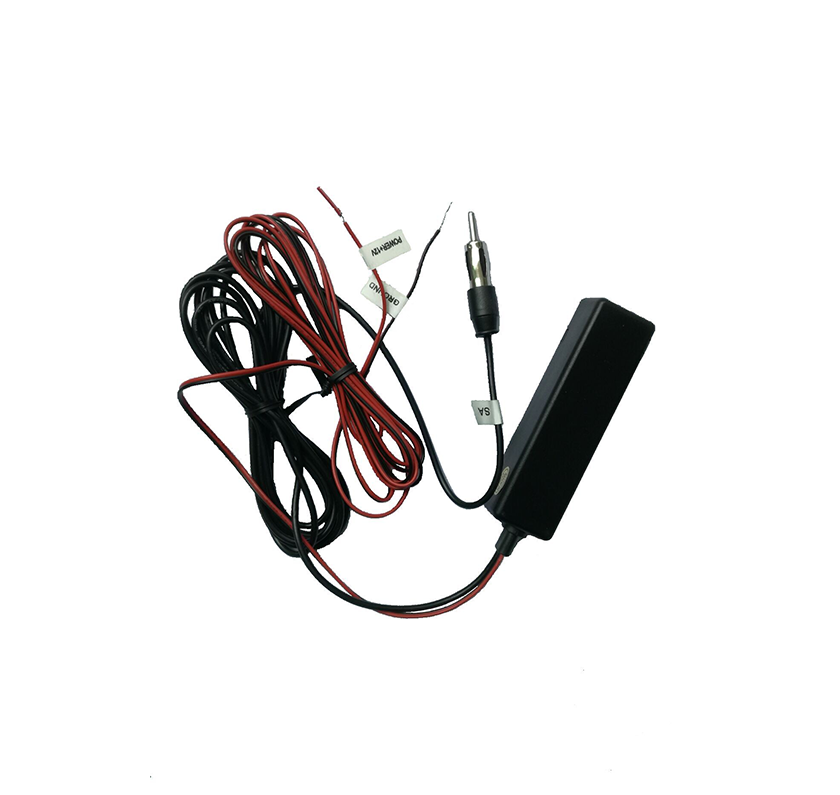
Transmitting antennas and receiving antennas are both critical components of wireless communication systems, but they serve distinct purposes and often exhibit notable differences in design, functionality, and operational requirements.
1. Primary Functionality
Transmitting antennas are designed to convert electrical signals from a transmitter into electromagnetic waves that propagate through space. Their core role is to efficiently radiate energy outward, ensuring that the signal reaches the intended receiver with minimal loss. For example, in a broadcasting tower, the transmitting antenna must distribute radio or television signals over a wide area. In contrast, receiving antennas capture incoming electromagnetic waves and convert them back into electrical signals for processing by a receiver. They focus on detecting weak signals from distant sources, such as a smartphone picking up a Wi-Fi signal from a router.
2. Design and Power Handling
Transmitting antennas typically require higher power handling capabilities to accommodate the strong electrical signals generated by transmitters. They are often built with robust materials to withstand heat and physical stress caused by high-power transmission. For instance, satellite transmitting antennas must endure the rigors of space while radiating signals over vast distances. Receiving antennas, however, operate with much lower power levels, as they deal with the faint signals captured from the environment. Their design prioritizes sensitivity and noise reduction. Smaller components and intricate signal-processing elements, like low-noise amplifiers, are commonly integrated into receiving antennas to enhance their ability to distinguish weak signals from background noise.
3. Directivity and Radiation Patterns
Transmitting antennas often emphasize directivity to focus energy in a specific direction, optimizing signal strength where it is needed. For example, a parabolic dish antenna used in radar systems directs radiation into a narrow beam to maximize range and accuracy. In contrast, receiving antennas may prioritize omnidirectionality to capture signals from multiple sources without precise alignment. A typical FM radio antenna, designed to receive signals from various broadcast towers, is omnidirectional to ensure reliable reception regardless of the transmitter’s location. However, some receiving antennas, such as those in satellite dishes, are highly directional to isolate specific signals in crowded frequency environments.
4. Frequency and Bandwidth Considerations
While both types of antennas must operate within the same frequency band for communication, their designs may differ based on bandwidth requirements.Transmitting antennas often need to maintain consistent performance across a broad bandwidth to support modulated signals with wide frequency content. Receiving antennas, especially in narrowband applications, can be optimized for a specific frequency to enhance selectivity and reject interference. For example, a cellular base station’s transmitting antenna must handle a wide range of frequencies within a cellular band, while a smartphone’s receiving antenna may be tuned to specific sub-bands for efficient signal capture.
5. Environmental and Mechanical Requirements
Transmitting antennas, often located in exposed environments (e.g., on rooftops or towers), must withstand harsh weather conditions, such as high winds, rain, and temperature fluctuations. Their mechanical structures are reinforced for durability. Receiving antennas, especially in consumer devices, are often compact and integrated into smaller enclosures, prioritizing space efficiency over ruggedness. For example, the internal antennas in laptops are designed to be lightweight and unobtrusive, even if they are less resilient to physical stress than their transmitting counterparts.
















 Home >
  +86 186 8871 1070


